
Recently, we participated in Birdlam, a big birding day event in Oklahoma. If you are not familiar with a big day, it is a fun event for birders to see who gets to find the maximum number of bird species on the particular day of the event. Participants will go out birding, typically birding all day long, and record all the different species they observe. Non-birders sometimes find it surprising that how there is no referee to overlook whether everyone is telling the truth. However, it comes quite naturally to birders to be honest about their findings and it would be very rare for someone to cheat just to win a big day event. I think this is because birding as a sport is more of a challenge to the birder themselves to overcome their own ‘best performance’.
Birdlam, a competitive version of a big day, was started by Payne County Audubon Society in 2021*. I found it a wonderful idea to have a virtual sport, in a way, without having to be physically close to each other, at the time of the pandemic. Last year’s event was restricted to the birders’ own county, but, in 2022, they allowed us to bird any part of the state on that day.
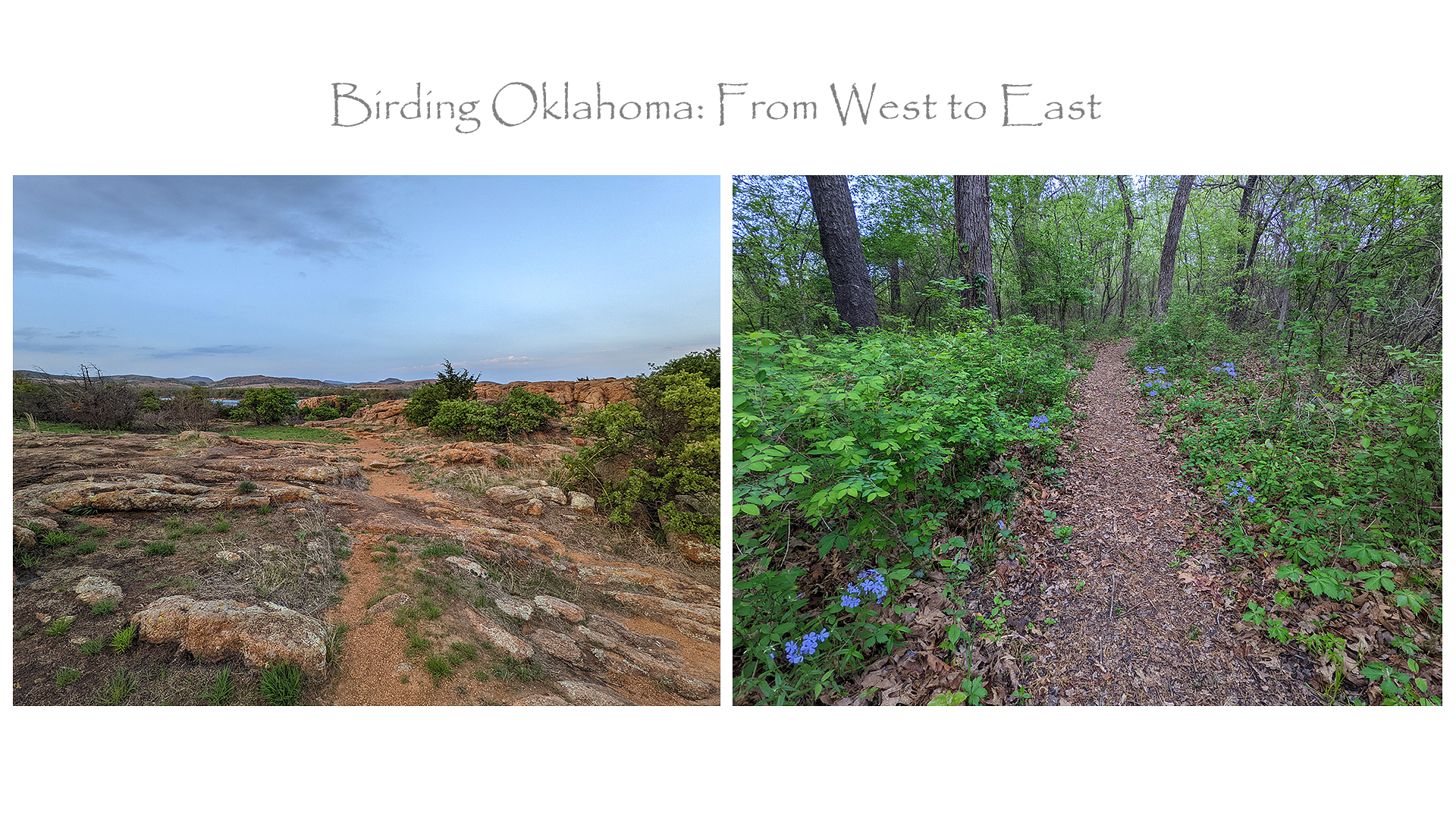
Oklahoma is a state with quite a bit of bird diversity as it has many of the Eastern as well as the Western bird species and a lots of different habitats. The Eastern part of Oklahoma is very green. On the other hand, some parts of Western OK is rugged and rocky. In between, we have vast plains and grasslands. The key to get many species on the same day is to explore as many different habitats as possible without wasting too much time driving from one spot to other. The Black Mesa in the Oklahoma panhandle is a wonderful birding location, but we figured it would be too far. So, we planned to visit Wichita Mountains National Wildlife Refuge and Hackberry Flats in the Southwestern OK and driving back to Northeastern OK through the day. The only problem was that Wichita Mountains NWR is almost 3 hours away from Stillwater! That’s too much of a drive to start the day. The solution we came up with was to reach there the day before and camp overnight. There’s nothing like waking up to the songs of birds at dawn and start from there. We actually wanted to camp in this refuge for some time now, but the campgrounds were closed the past two summers due to COVID. It is open this year, and we made sure to have a camping spot reserved!
We reached at Wichita Mountains NWR around sunset the day before Birdlam. The whole weekend was supposed to be super windy (welcome to spring in Oklahoma!), with wind speed consistently over 25 mph. High wind is normally not great at all for birding, but we thought “It is what it is! Let’s see what we can find.” We did a little bit of scouting near Quannah Parker dam, and saw many many many sparrows, mostly Lark, Chipping and Clay-colored. An Eastern Phoebe pair was nesting right on the dam. We figured these would all be there the next morning. We had birded this area before, and was confident to get some nice ones despite the wind.
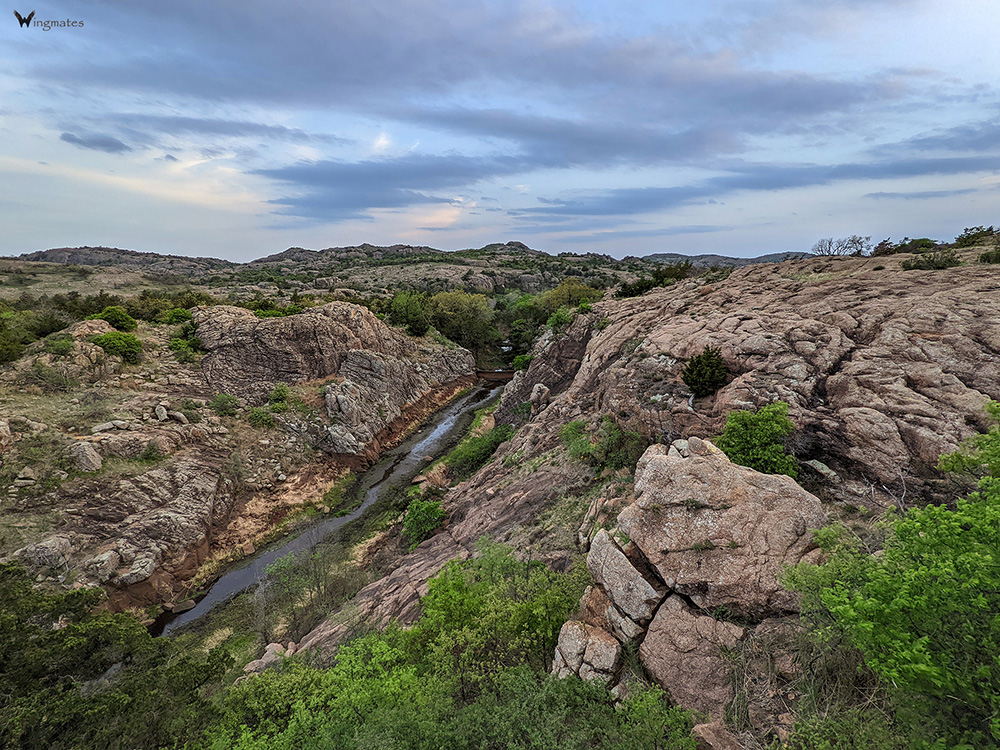 View from Quannah Parker Dam
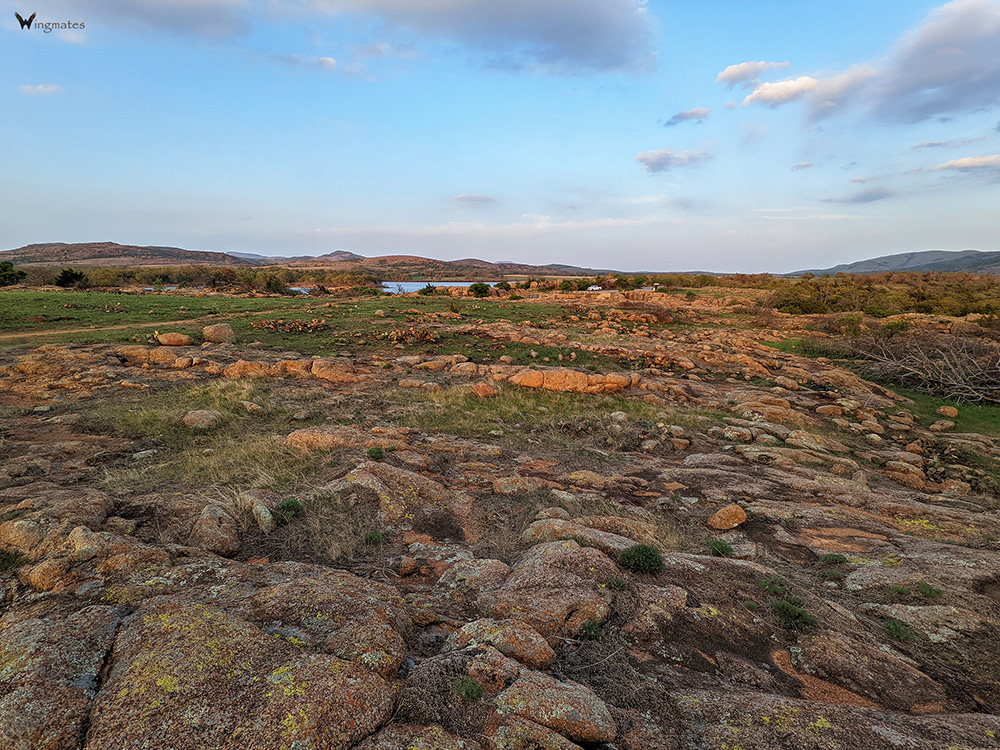 Beautiful rocky landscape at Wichita Mountains NWR
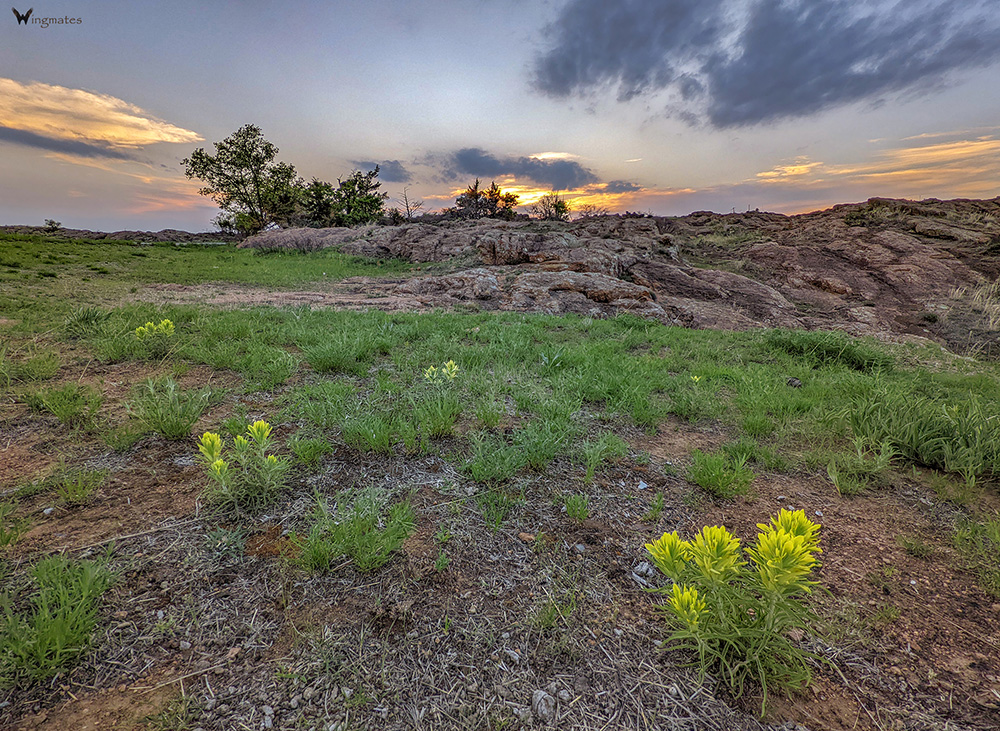 Paintbrush Sunset
Camping in our new car was fun. Sreemala loves organizing everything for car camping, and she made sure that we had everything we needed. The weather was pleasant. We woke up around 6am and immediately heard the Common Poorwill and Chuck Will’s Widow. Both of them were lifers! I love nightjars in general, and it made me happy that we could start with two amazing nightjars and add two to the tally of our life lists. The only other possible lifer we were hoping to get on this day was American Golden Plover, which we could not find throughout the day. We walked the trail behind the education center at sunrise. This area is usually quite good for songbirds. We got several species of warblers and both the Red and White-eyed Vireos. The Clay-colored and Chipping Sparrows were abundant. This year seems to be a really good one for Clay-colored Sparrows. Usually I see smaller number of them mixed with a larger flock of Chipping Sparrows, but this year they are competing well with the Chippings in terms of the number. Not a super colorful bird, but I love their buffy coloration and the patterns on them. Lark Sparrows were singing out loud. But the relatively rarer sparrow that I was looking forward to seemed to be more shy, hiding from the gusty wind… A Rufous-crowned Sparrow. We were happy to pick it up since it would be rather unlikely to find them at any of the other spots we would visit.
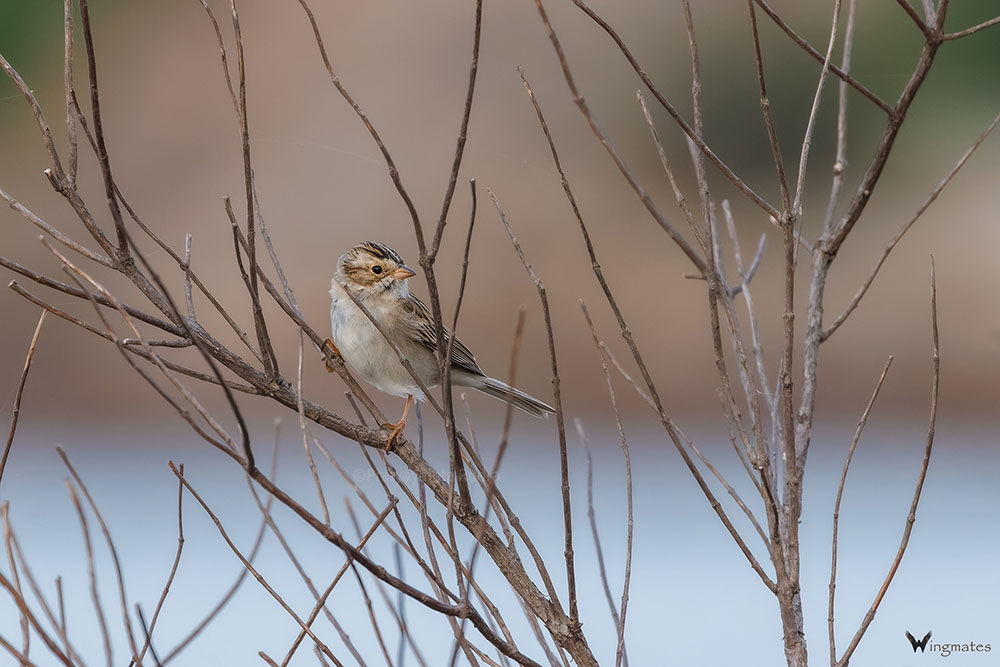 Clay-colored Sparrow
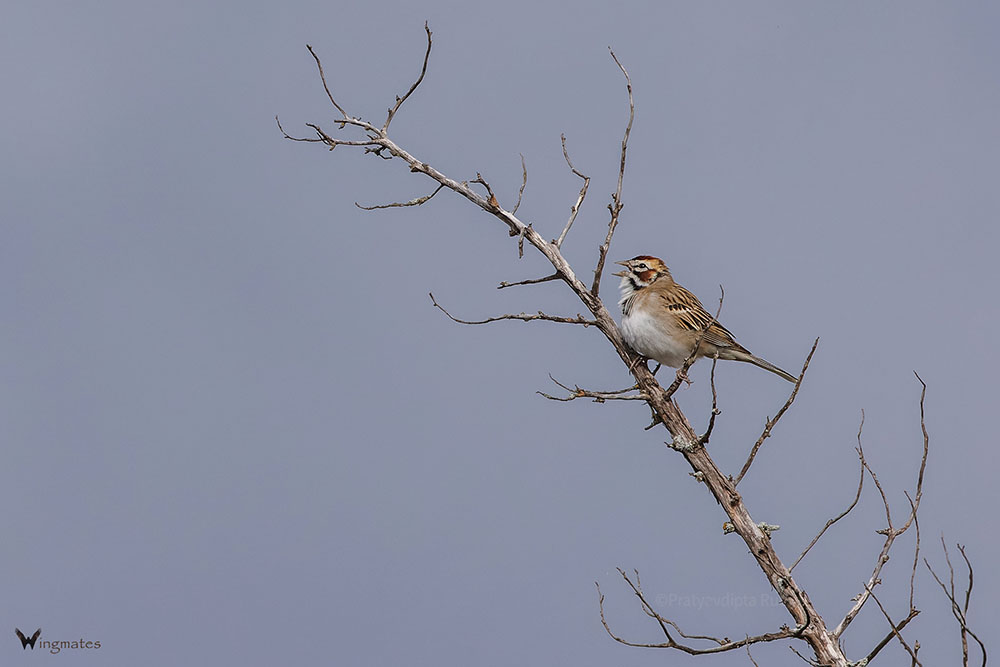 Lark Sparrow singing
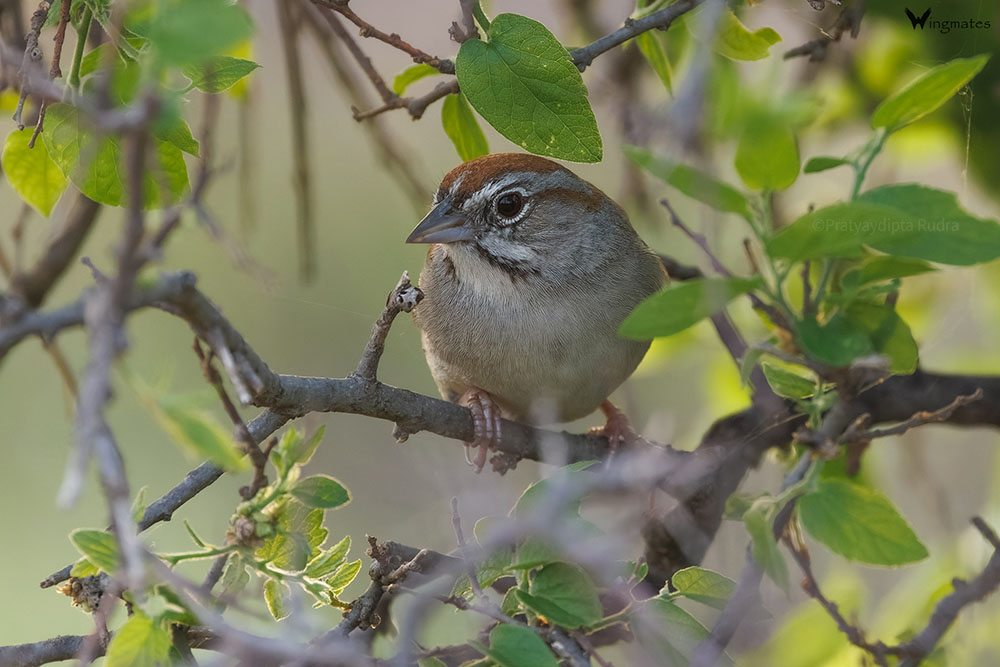 Rufous-crowned Sparrow
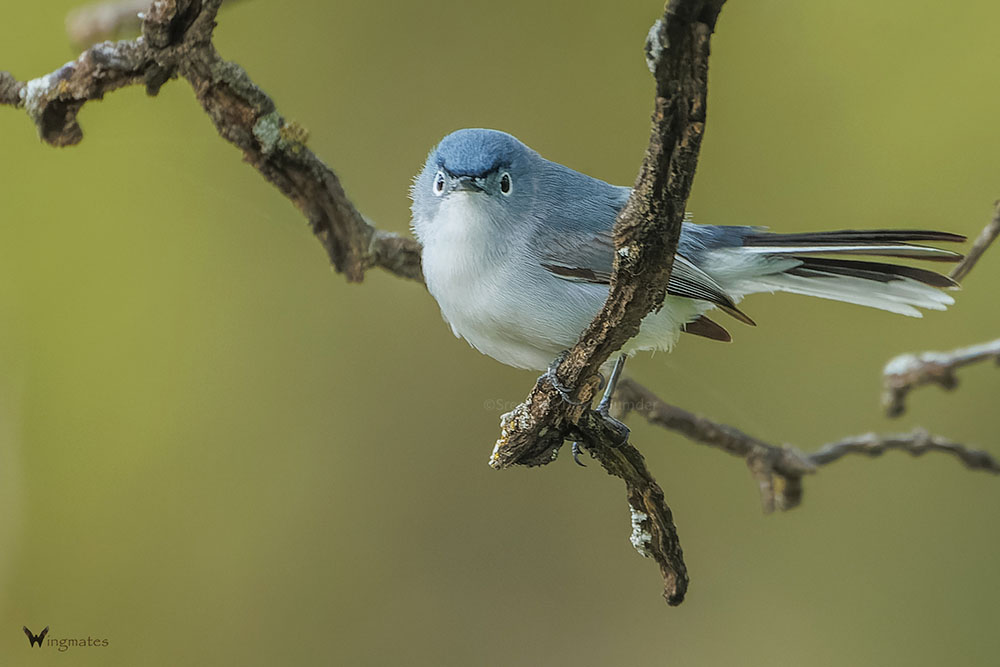 Goofy looking Blue-gray Gnatcatcher
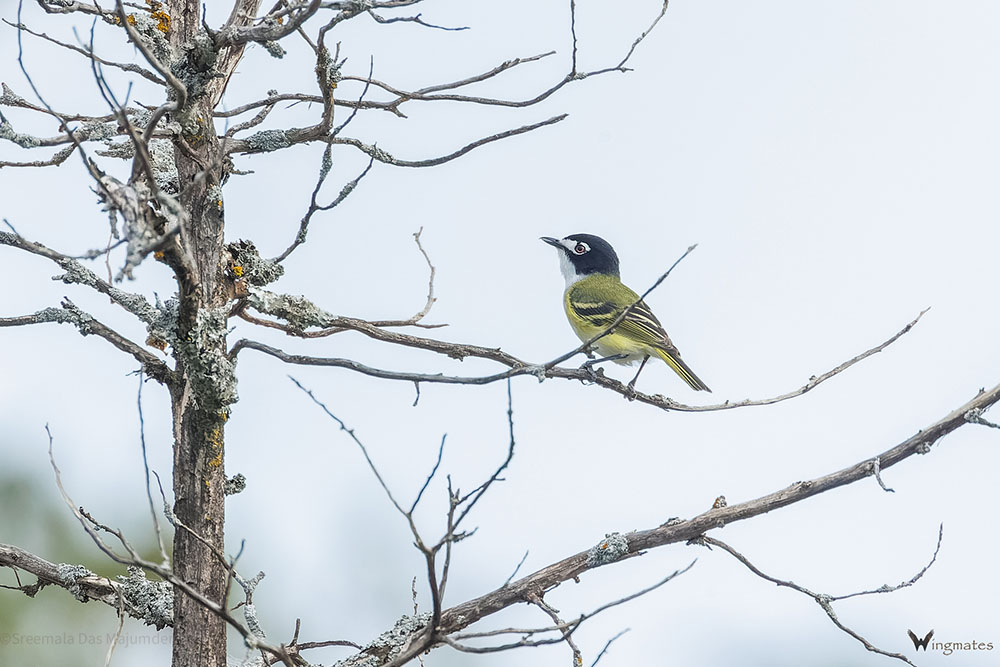 Black-capped Vireo
Not unexpectedly, Blue-gray Gnatcatchers were everywhere in the scrub oaks. Painted Buntings should have started arriving, but we couldn’t find one. One Black-capped Vireo, the star of this habitat, was singing away. Black-capped Vireos were considered endangered until very recently due to their sharp decline over the previous few decades. My next photo is one of villains considered to be partly responsible for the decline of these vireos… Brown-headed Cowbird! In case you didn’t know, Brown-headed Cowbirds are brood parasites, i.e., they lay eggs in other bird’s nests hurting these birds’ reproductive success. Although they are native to the US and have evolved along with other native birds, their expanding range when combined with shrinking habitats of some endangered bird species can lead to problems. The cowbirds are named so due to their behavior of following the cattle and catching insects flushed by the cattle while grazing. In the image below, you can see a glimpse of this behavior as it follows an American Bison. There were many cowbirds on this field, and among them was one brightly colored bird that we did not see again on this day: a Yellow-headed Blackbird. We didn’t wait for getting a good image of it.
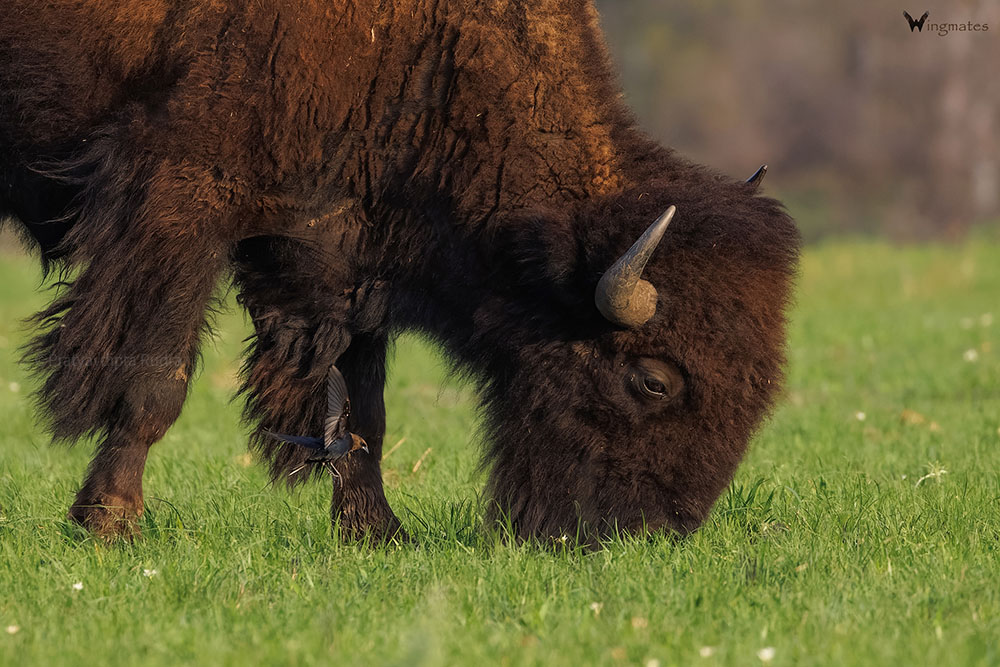 American Bison and Brown-headed Cowbird, Wichita Mountain NWR
Other notable birds we found only at Wichita Mountains were Spotted Towhee, Wild Turkey, Wood Duck, Ruby-crowned Kinglet, Black-chinned Hummingbird, Osprey, Bewick’s Wren and Rock Wren. We missed Greater Roadrunner and didn’t really try for Zone-tailed Hawk that spent the past two summers at the Wichita Mountains. It was funny that I got a rare bird alert later in the day showing that the Zone-tailed Hawks were already back and were seen by some other birders that morning!
Our next stop was Hackberry Flats Wildlife Management Area, about an hour Southwest of the Wichita Mountains. Although this meant that we would be further away from our next few destinations, this was a spot we couldn’t miss due to the huge variety of birds that could be found here. The wind was picking up, but we still managed to get a few nice Western species such as Say’s Phoebe, Western Meadowlark, Northern Harrier, and Vesper Sparrow. The only two Loggerhead Shrikes, which was the target bird for this year’s Birdlam, were found here. Horned Larks and Savannah Sparrows were abundant, but we failed to find any Dickcissels. Unfortunately, the flats seemed to be completely dry without any mud for the shorebirds. The reservoir was the only place of note to find some of the shorebirds and ducks. A Pectoral Sandpiper, a few Stilt Sandpipers, White-rumped Sandpipers, and Snowy Plovers were my favorite finds among at least 10 other shorebird/duck species. However, the best find from this spot was not a water bird. I knew that Cave Swallows were possible to find in this area; so I looked for them. Indeed, there was one, mixed with at least 50 Cliff Swallows. This was our second time ever finding a Cave Swallow (previously seen in Texas). Someday, I will get a good photo of them!
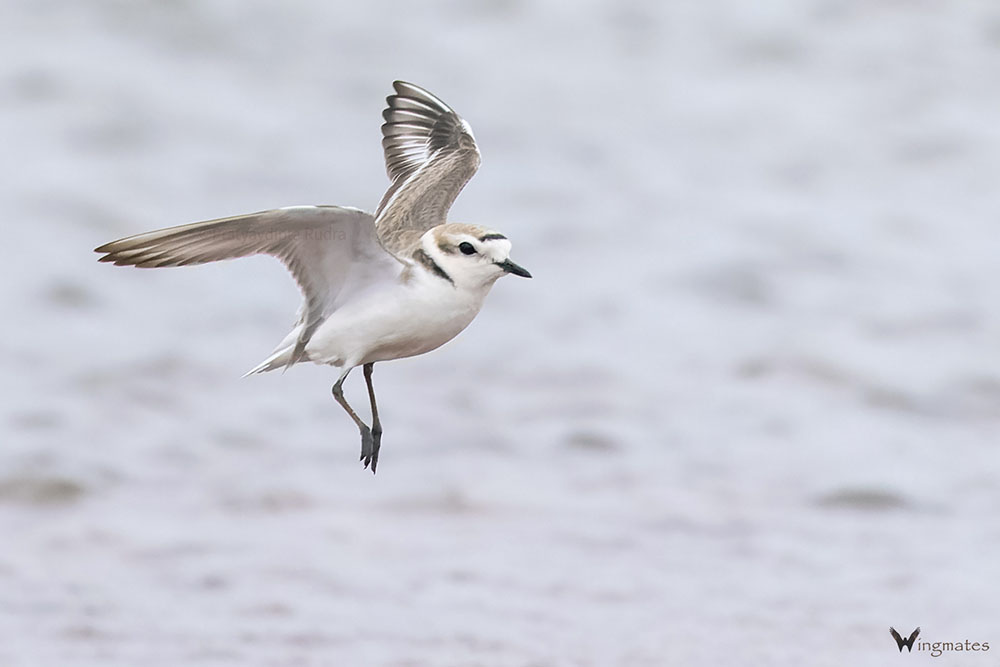 Snowy Plover
We started driving back around 10:30am toward Oklahoma City. We decided to stop at a rest area to quickly pick up lunch, and this is what we saw right next to the gas station…
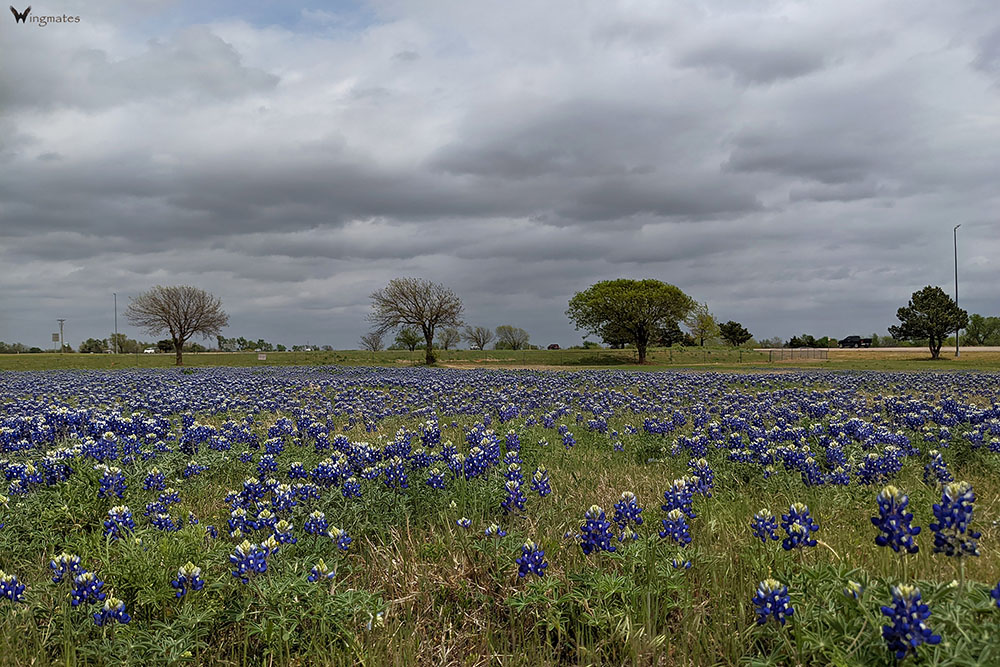 Beautiful patch of bluebonnets right where we stopped for lunch
Our only stop in the Oklahoma City area was Lake Hefner. I had seen some recent reports of a few interesting birds in this area. We were able to find all of them (California Gull, Laughing Gull, Common Loon, Neotropic Cormorant) except one (White-winged Scoter). We did pick up some other more common birds that we had not seen yet. The wind was blowing over 30mph by then, and it was tough to scope for birds on the water since the waves were huge… It almost felt like standing by the ocean!
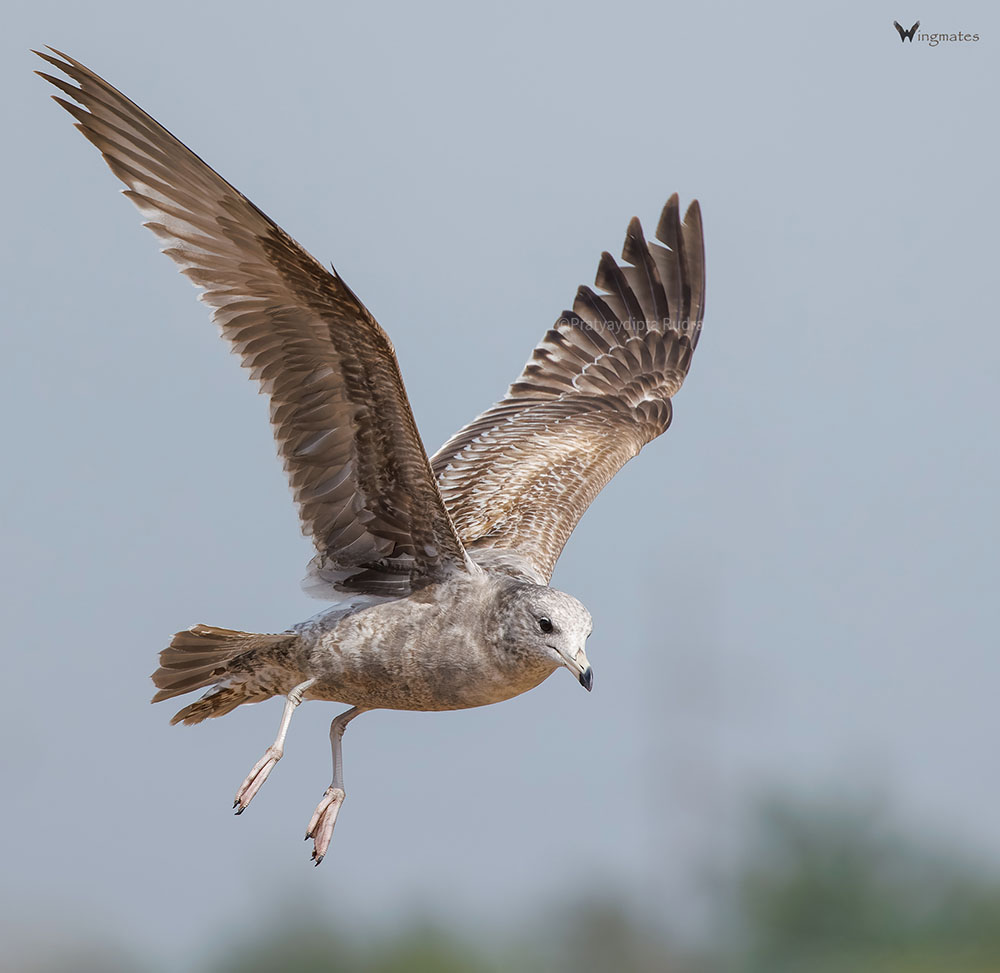 California Gull
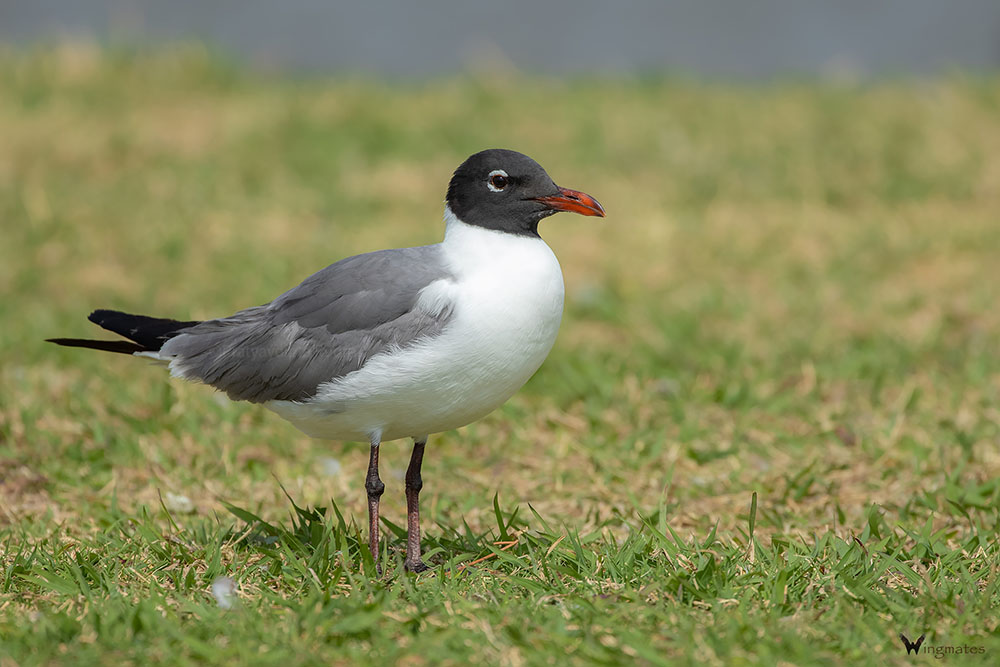 Laughing Gull
The plan was to bird in the greater Tulsa area in the afternoon after making a quick stop at Stillwater. In the Southern Tulsa area, we checked out Bixby Sod Farms and some nearby parks. A good number of Swainson’s Hawks (mostly immature) were seen in this area. Swainson’s Thrushes were abundant too. If only we could find a Swainson’s Warbler (very rare but not completely impossible) we could have made Mr Swainson proud of us! Instead, we found possibly the best songbird of the day, a Rose-breasted Grosbeak. Unfortunately, my camera could not lock focus on it. It was nice to list some relatively more common ones such as Summer Tanager, Warbling Vireo, Baltimore Oriole, Northern Parula, and Ruby-throated Hummingbird. A Goldfinch couple, also first of the day, were more camera friendly.
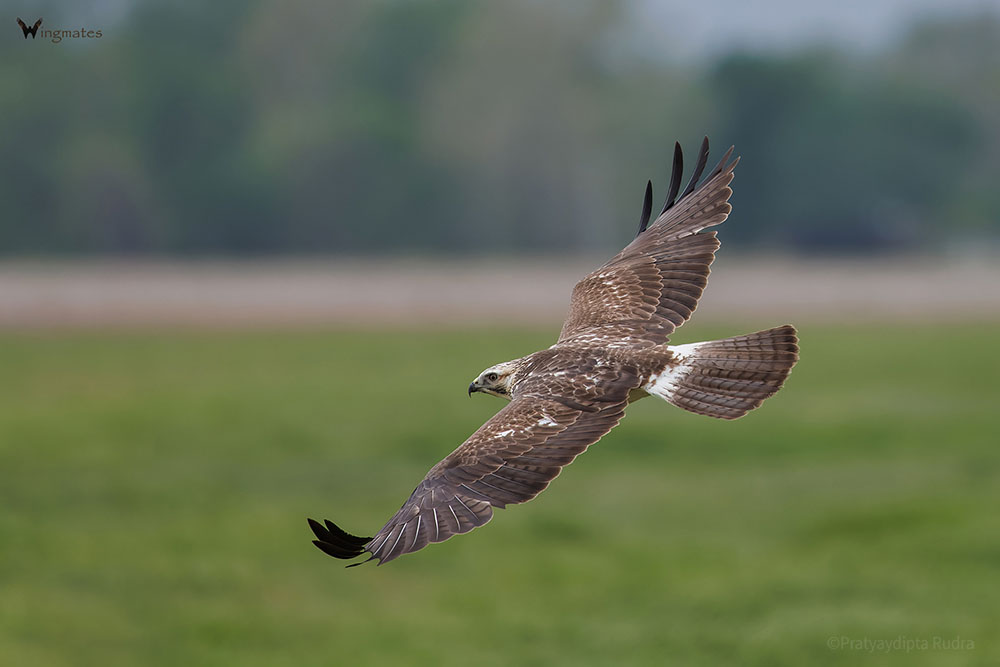 Swainson’s Hawk
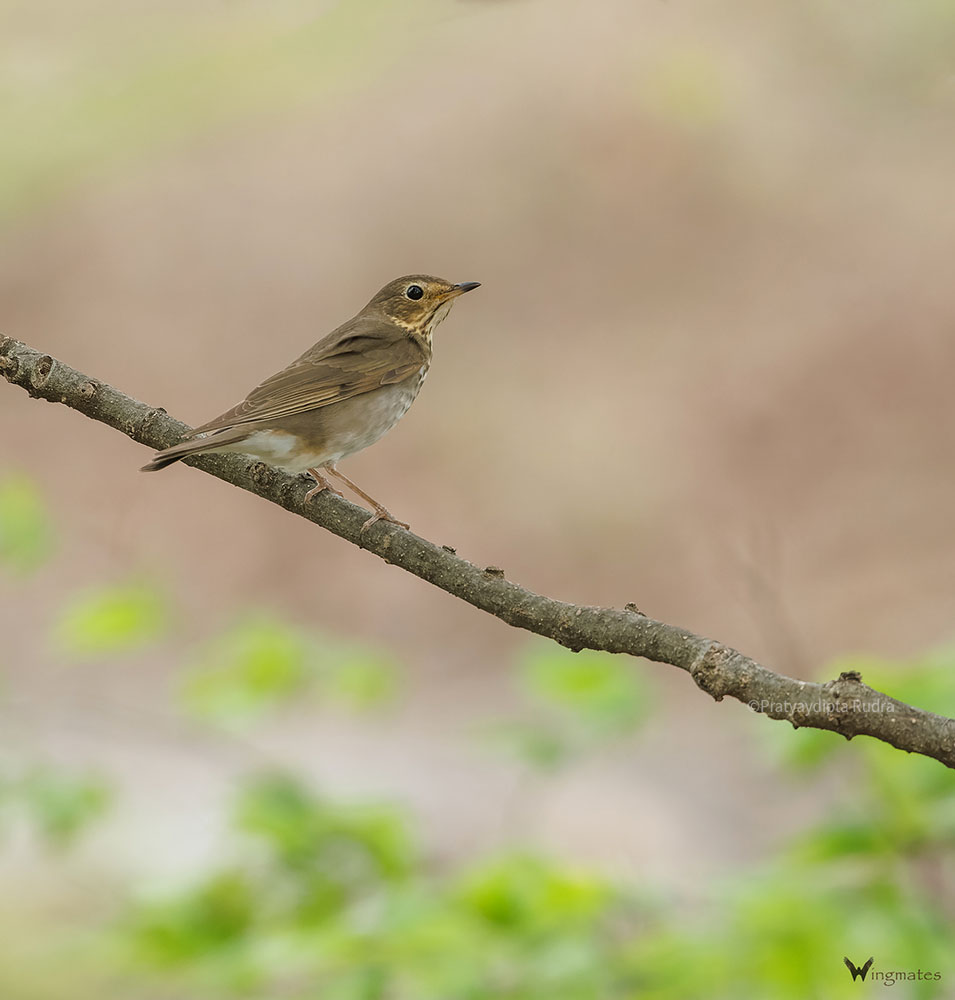 Swainson’s Thrush
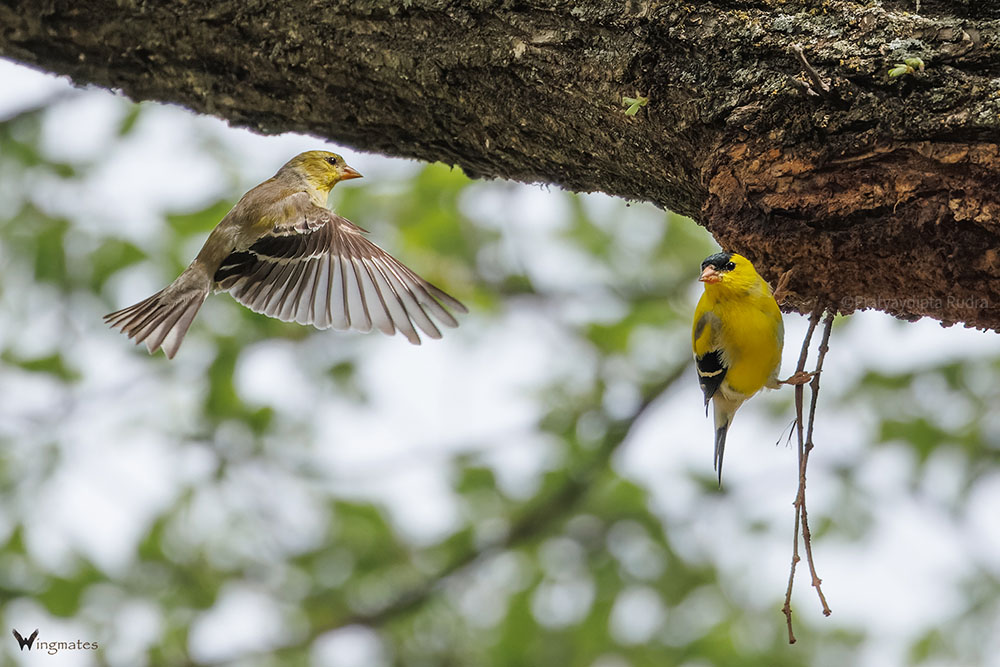 American Goldfinch pair
Other good birds south of Tulsa were American Pipit and Northern Flicker. We were still missing some really common birds, especially some common sparrows as we headed to our final destination, the wooded area near Mohawk park in Tulsa. When we were driving there, I looked at the Oklahoma rare bird alert and noticed that a Winter Wren was found that morning near downtown Tulsa. It would not be a big detour, so we decided to stop by. It wasn’t even a proper park, just a small green patch right in the middle of the downtown. It was cloudy the whole afternoon. A light drizzle started when we reached there. I wasn’t hoping to see anything, but still grabbed my camera from a quick five minute walk on the patch. To my surprise, it turned out to be the birdiest place of all afternoon! Seemed like a sparrow fallout with the birds trying to seek shelter before the thunderstorm. Lincoln’s, White-throated and Harris’s Sparrows were easy to pick. House, Clay-colored and Chipping Sparrows were also there. Then popped up a Field Sparrow. First of the day. Very well! Then, a Song Sparrow. Late for end of April, but was reported recently. This was also the first of the day. What showed up next was not something I was hoping to see in downtown Tulsa. A Grasshopper Sparrow! We did hear two of them earlier in the day, but it was a lot of fun finding one at this spot.
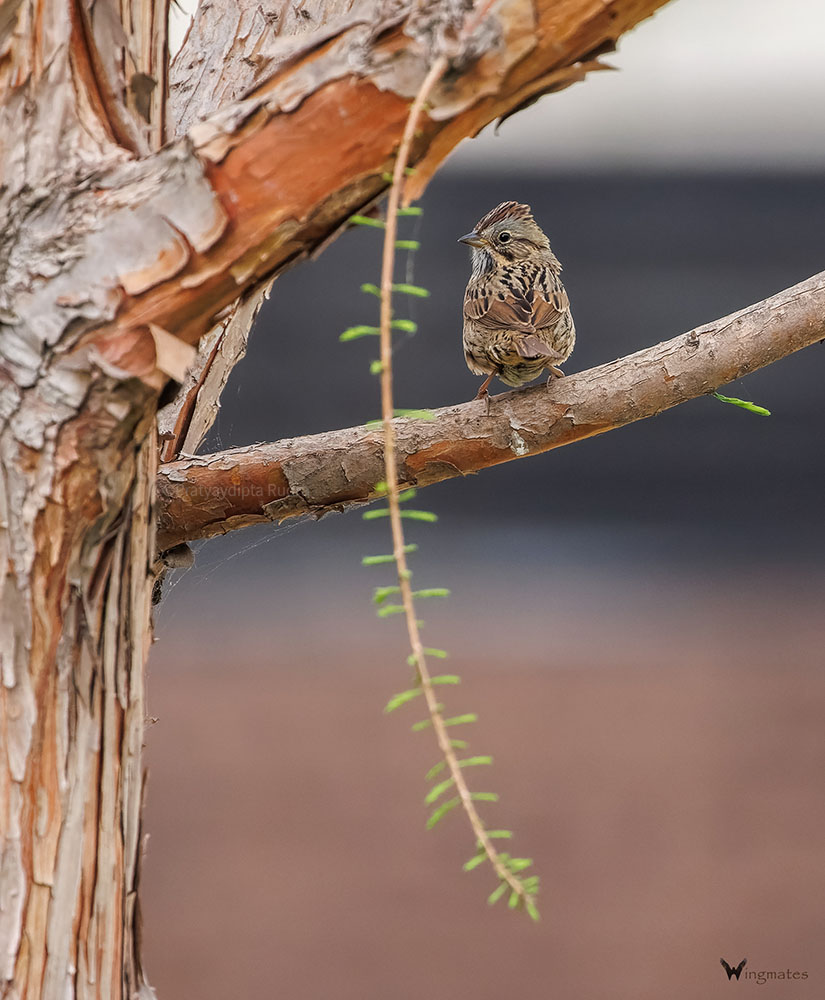 Lincoln’s Sparrow
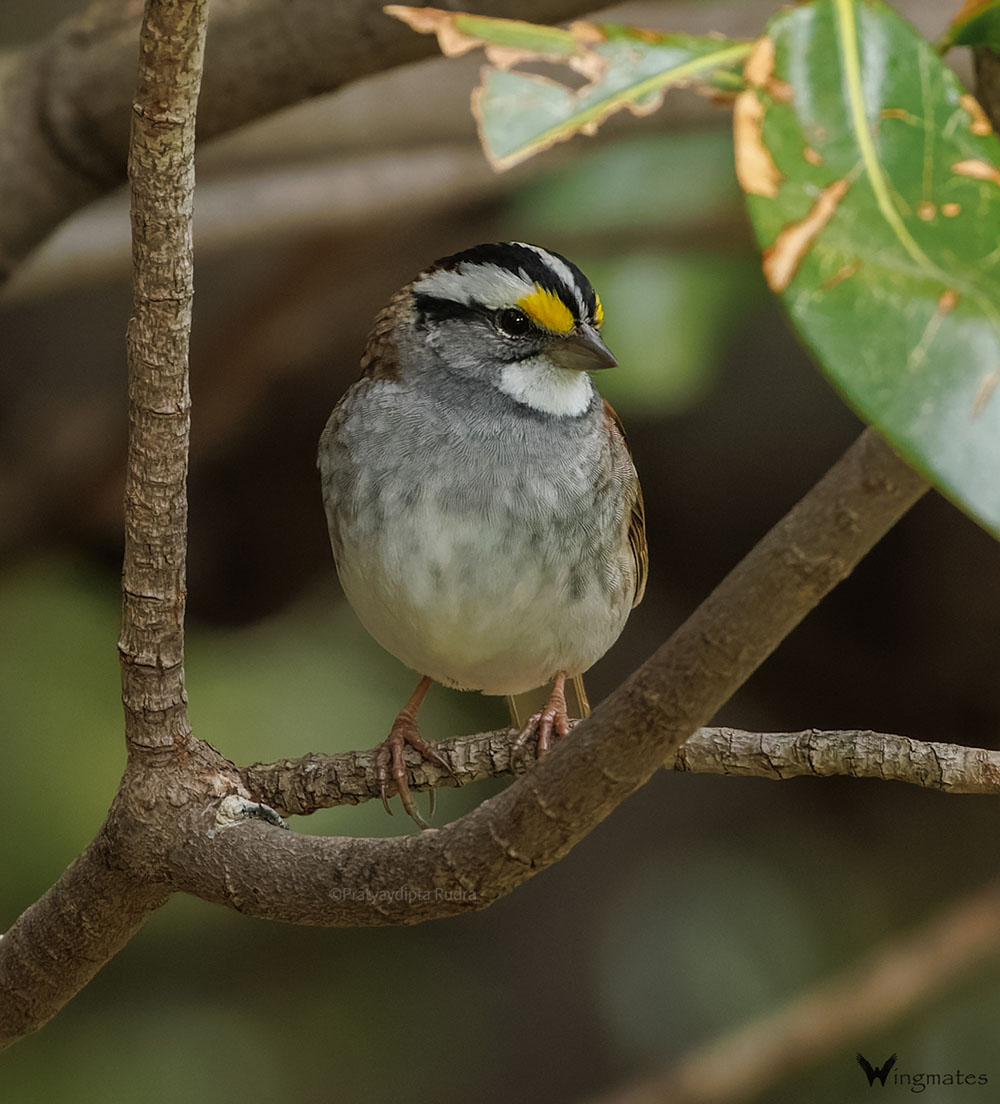 White-throated Sparrow
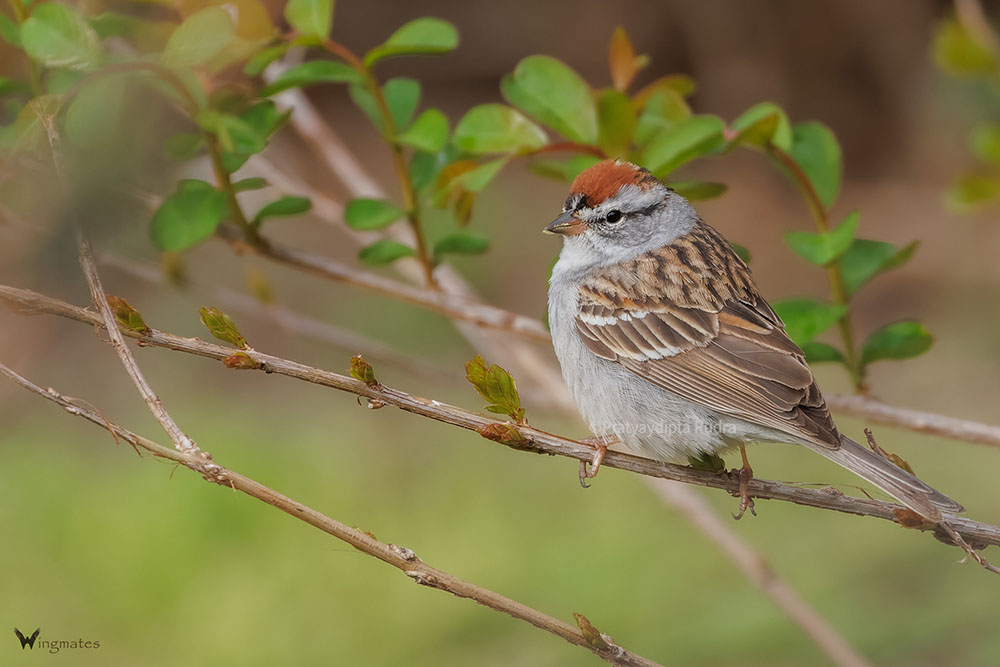 Chipping Sparrow
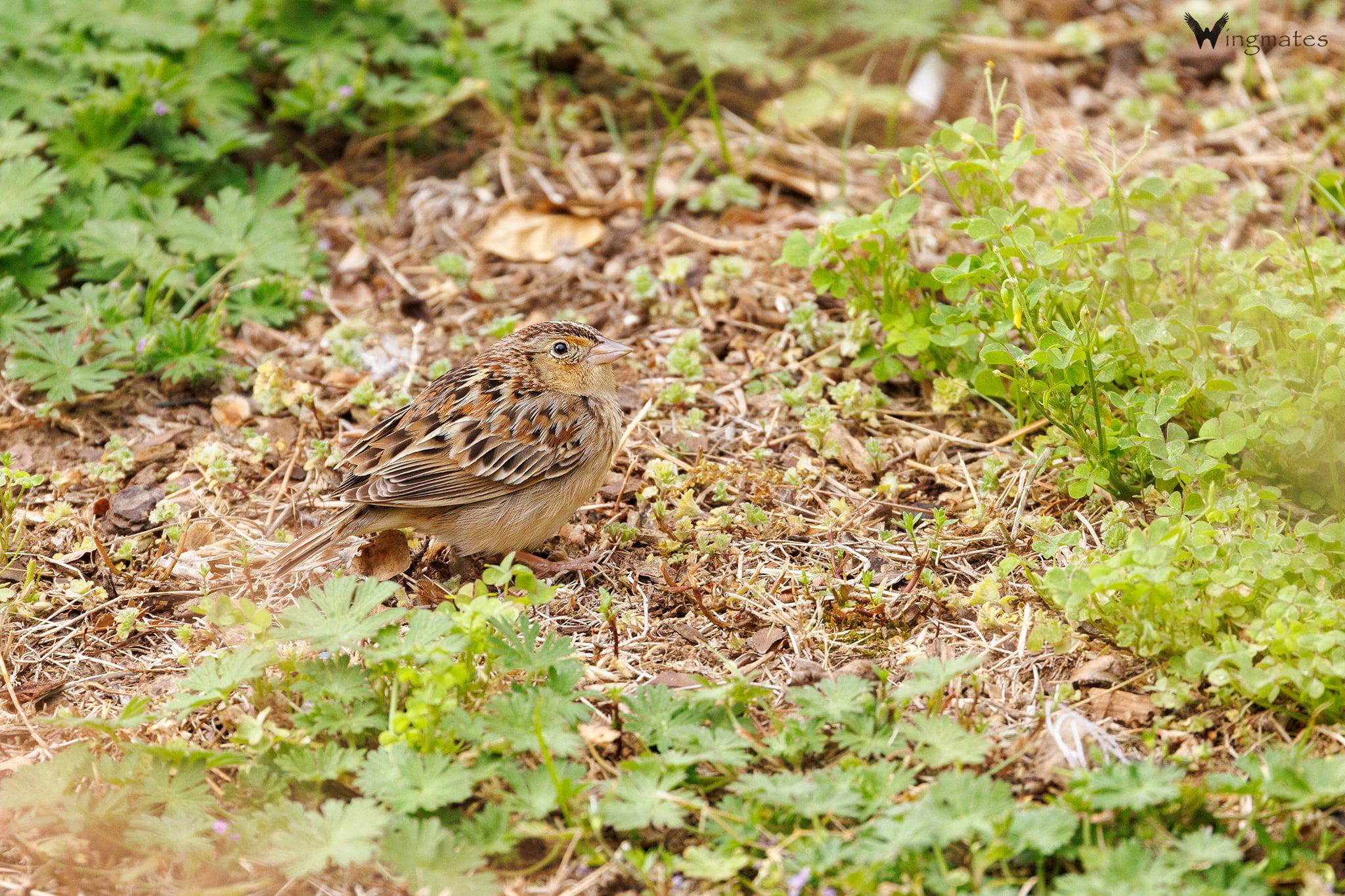 Grasshopper Sparrow
It was getting quite dark due the clouds by the time we reached the North Woods at Mohawk park. I love walking this trail in the spring. The lush green leaves and the wildflower blooms make it very enjoyable. The Woodland Phloxes were everywhere! It wasn’t very birdy, but we did find some songbirds, a Barred Owl, and a Gray Catbird. The most fun find was a group of Dickcissels high up in a tree. I had never seen a Dickcissel so high up and could only find them because they were singing relentlessly… as usual!
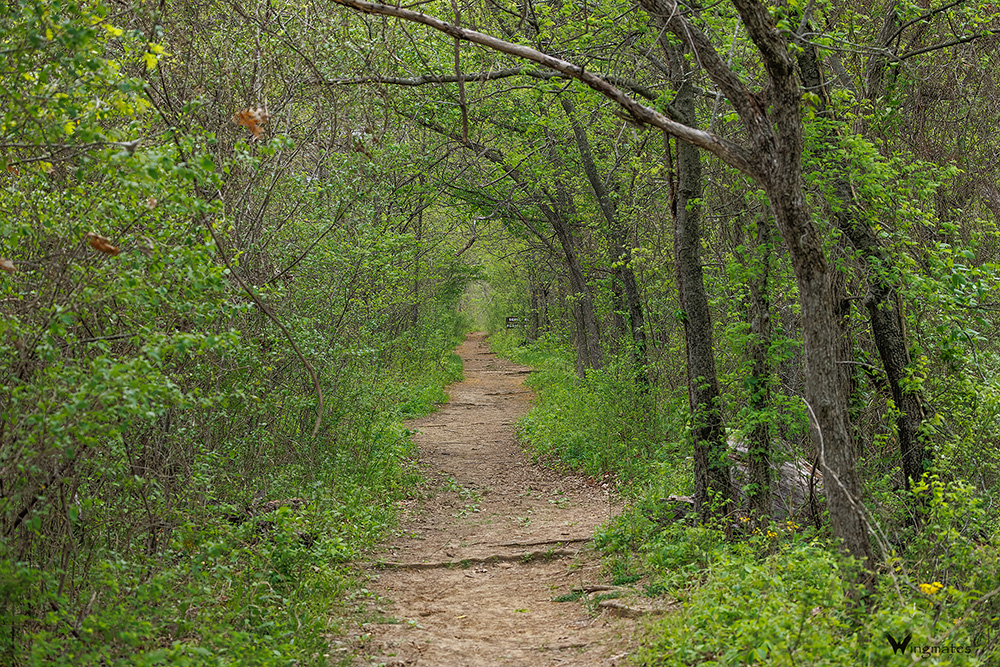 Forest trail near Tulsa
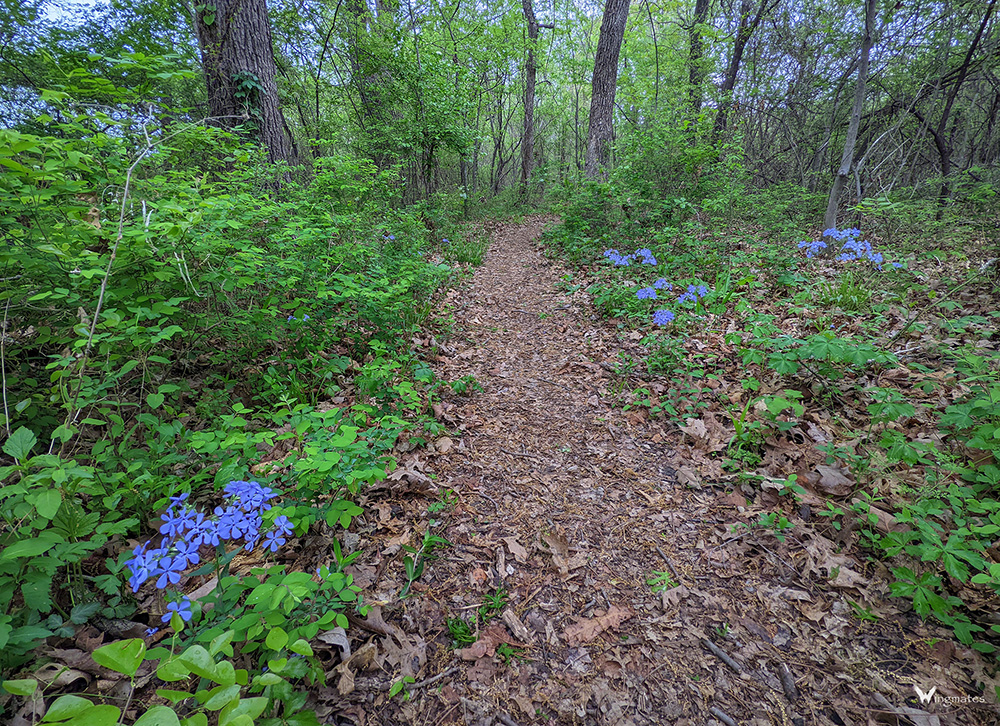 Trail bordered by beautiful patches of Woodland Phlox
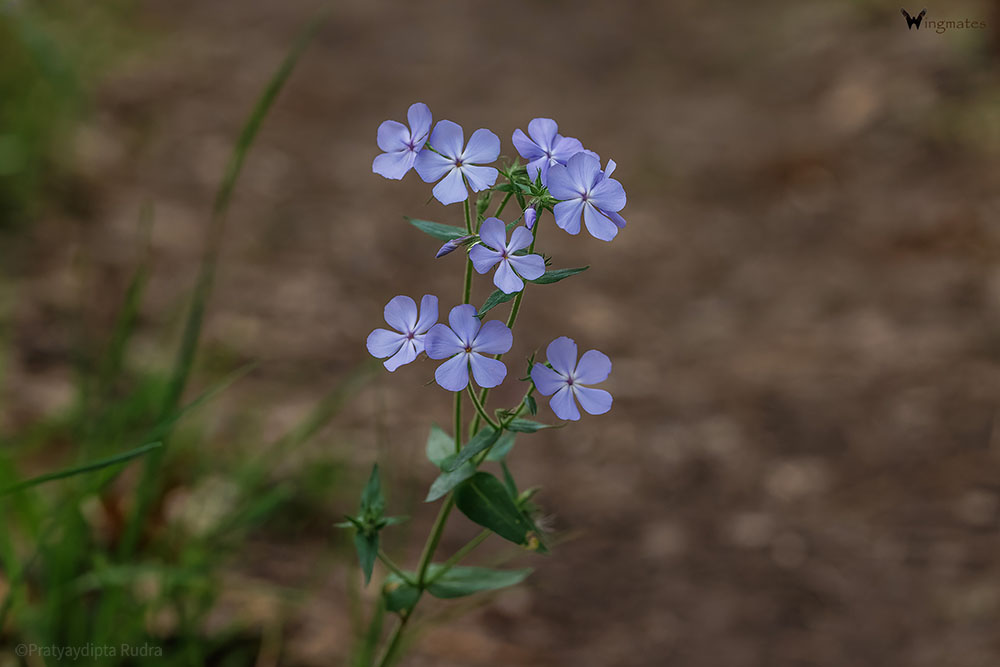 Woodland Phlox
As it was getting very dark, and much less birdy, we decided to call it a day. I was wondering if I can get another nightjar as the last bird of the day, but got a relatively unexpected one as this Blue-winged Teal flushed a few feet away from us. This is a low light high ISO image, but I love how the beautiful blue patch on the wing is visible.
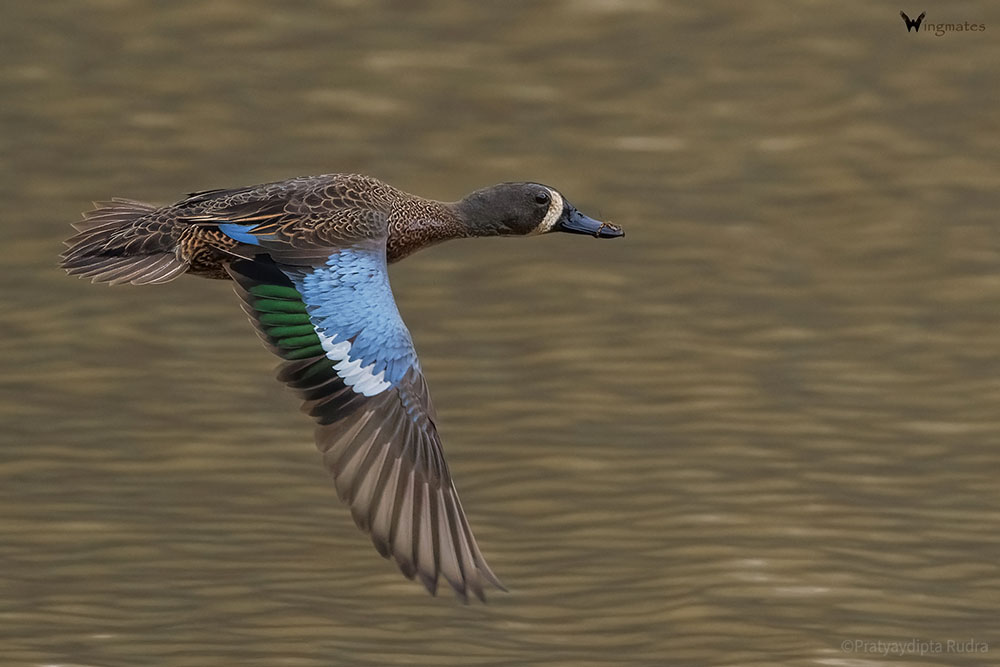 Blue-winged Teal
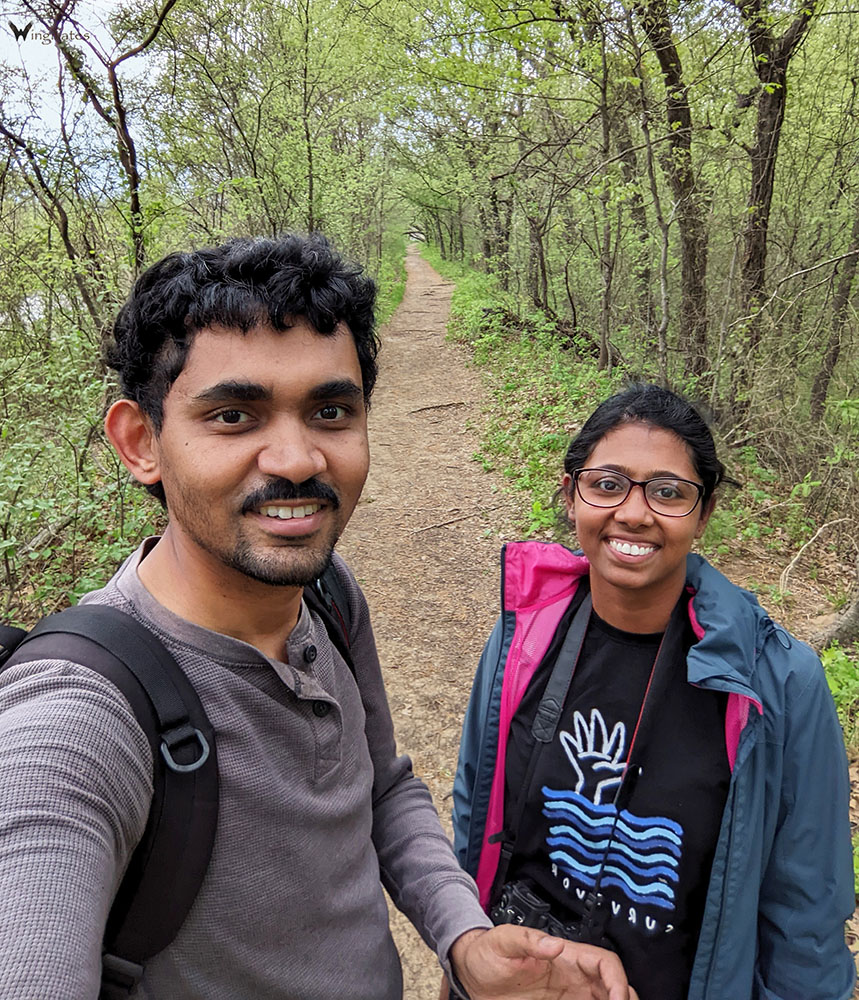 End of the day selfie
We didn’t expect any more drama on our way back, but Oklahoma weather God had some other ideas! As soon as we started driving towards home, we got a text message from the OSU system saying that a tornado warning has been issued in Stillwater. Despite watching critters in flight all day, we had no intention to fly in the air on a tornado! The developing supercell looked ominous. Cars were stopping beside the highway and emergency trucks were getting ready. At one time, we considered stopping, but eventually decided to go on after carefully listening to the weather updates. We did have to drive through a good amount of rain.
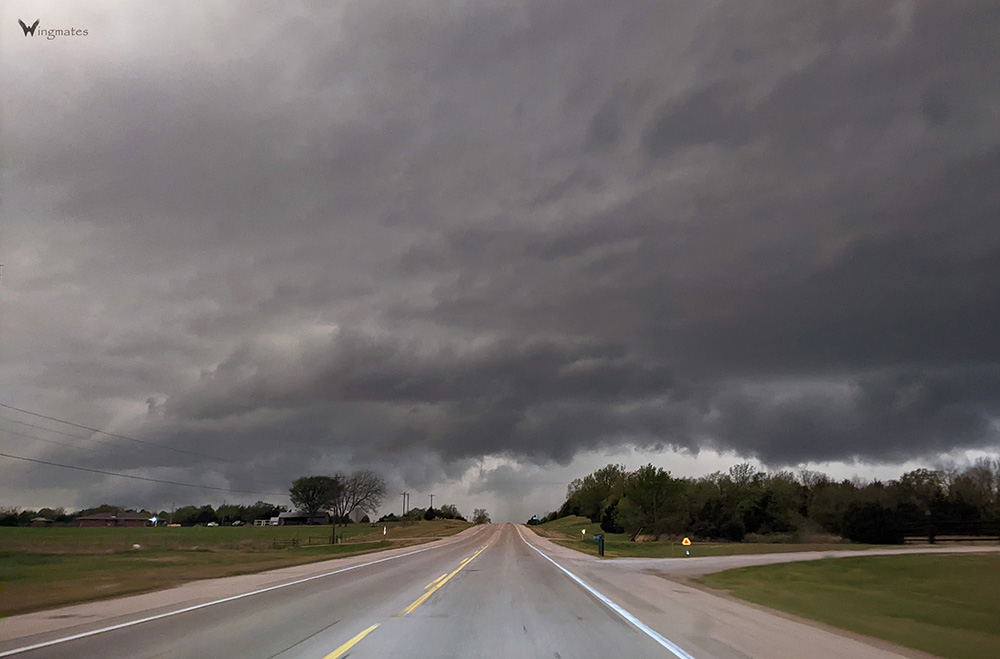 Thunderstorm approaching
That night, we added our tally of all the bird species we observed through the day. It was 143 plus two domestic species. Not a bad number at all! More importantly, it was a lot of fun spending a more-birding-less-photography day after a very very long time.
P.S. Unfortunately, we could not get hold of the Birdlam t-shirts before the event. So, here’s a photo of us wearing it while birding at a nearby park in Stillwater.
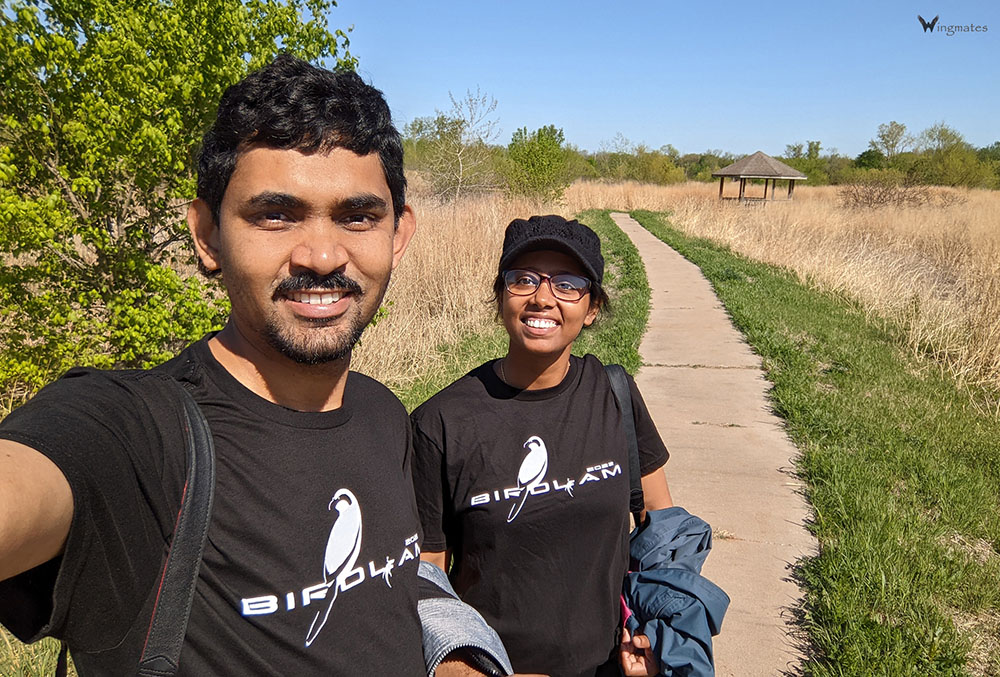 Post Birdlam selfie in Birdlam t-shirts
P.P.S. It turns out that Sreemala and I have won the award for the highest number of species observed on that day by any group. Way to go Wingmates!
* In fact, as Tim O’Connel says, “Birdlam is just the latest iteration of Big Day competitions sponsored by the Payne County Audubon Society that go back at least to the mid-1980s.”