
February is the shortest month in the calendar and our birding adventures were even shorter this month. We hardly got time to go out birding other than one particular weekend. So, we will also add some older photos from last year to keep you entertained! We had a friend visiting us from Florida particularly to get his lifer Short-eared Owl and potentially get some good pictures. Our last few trips to the owl locations were not very fruitful but we were hoping that the snowstorm few days before his visit would increase our chances to see the owls.
On the way to our first owl location, we stopped at a spot where longspurs were recently being reported. Our friend had not seen Smith’s Longspur or Lapland Longspur. We were glad to find both longspurs for him, and in fact it turned out to be the best photo opportunities for Smith’s Longspurs we ever had. There are not many birds that you can get as a lifer in Oklahoma if you have extensively birded both the Eastern and Western parts of the United States. Smith’s Longspur happens to be one of the most likely among such candidates. These birds spend their summer up north in Canada and Alaska, and fly down to the central states, including Oklahoma, during the winter. However, they are hard to get good photos of during the winter since they like to stay hidden in the grass and the only good views are usually when they take flight.
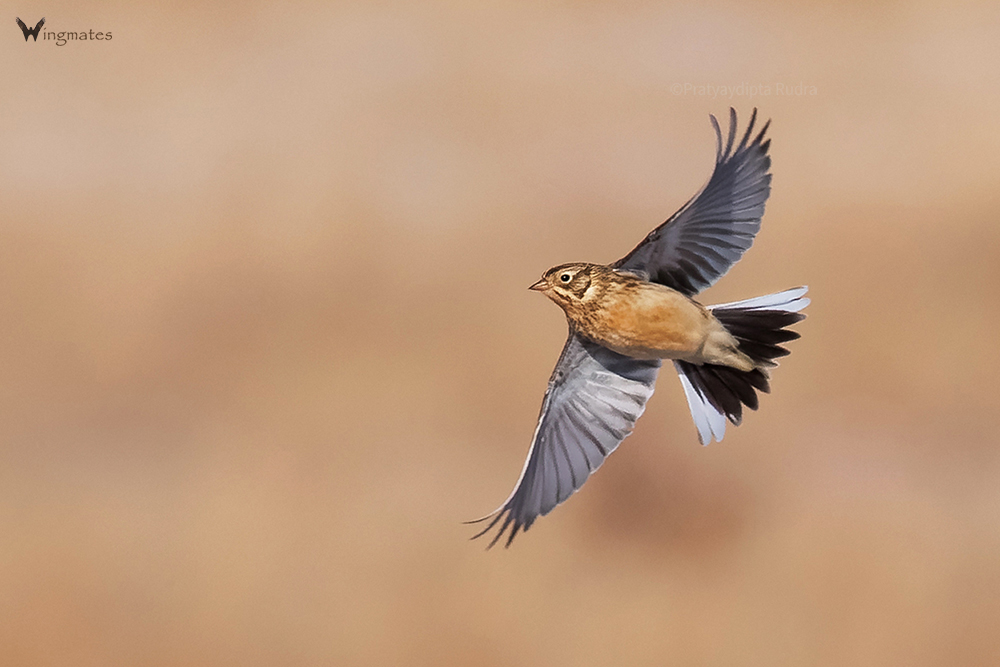 Smith’s Longspur in flight
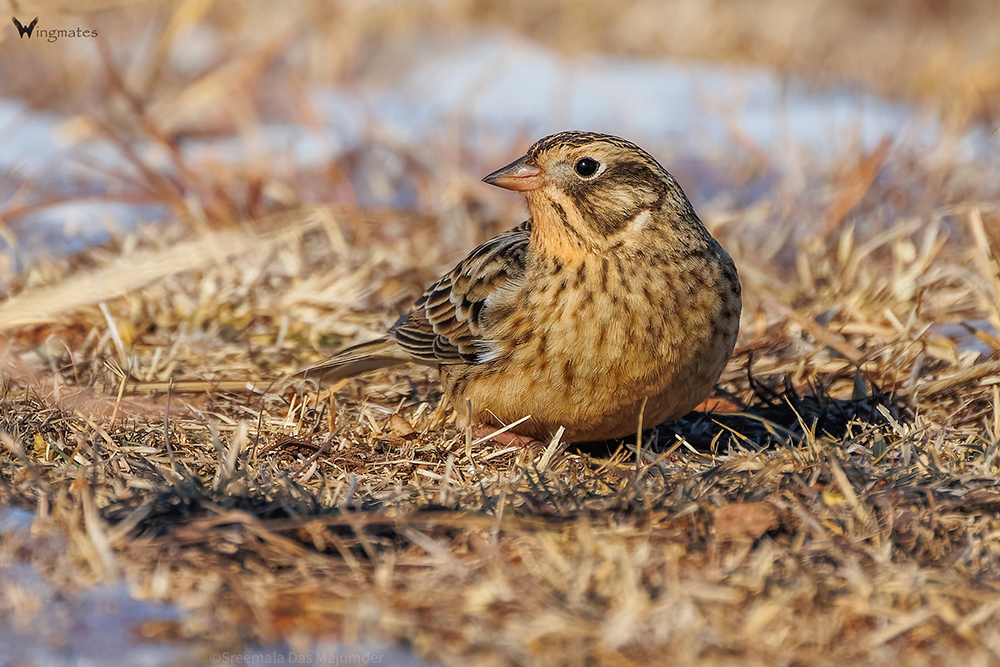 Smith’s Longspur taking a break from feeding. Notice the low posture.
But this time it was different. Smith’s Longspurs are seed eaters. Since it snowed for the past two days, the grass was covered with snow. As the sun went up, the snow started to melt making some patches in the field free of snow. This resulted in the hungry longspurs flooding down to these patches and feeding vigorously, which gave us the perfect opportunity to wait and let the birds get comfortable. Eventually they came very close to us without paying much attention to our presence.
It was a good opportunity to observe their feeding behavior and it became evident why they are hard to photograph in the grassy fields. While feeding, they stay very very low. They almost crawl through the grasses like a caterpillar. Even a field with 3 inches of grass can be enough to fully hide them! You could probably see them moving, but it would be impossible to get any good photos. On this occasion, the snowy field made it difficult for them to stay hidden! Sreemala tried to make a handheld video in the super chilly condition just to document their feeding behavior.
Smith’s Longspur feeding style
It was actually pretty hard to stay out there for very long. The sunny day had fooled us into thinking that it won’t be as cold, and we did not take our gloves with us. Of course, we were wrong! But we couldn’t miss this chance of watching the longspurs up close! Pratyay was happy to risk freezing his knees while trying to stay low on the snow, just like the longspurs. The Longspurs eventually took off after feeding for a while. We took some flight shots, and then left the spot. As they took flight, we were delighted to see some Lapland Longspurs mixed in with the Smith’s.
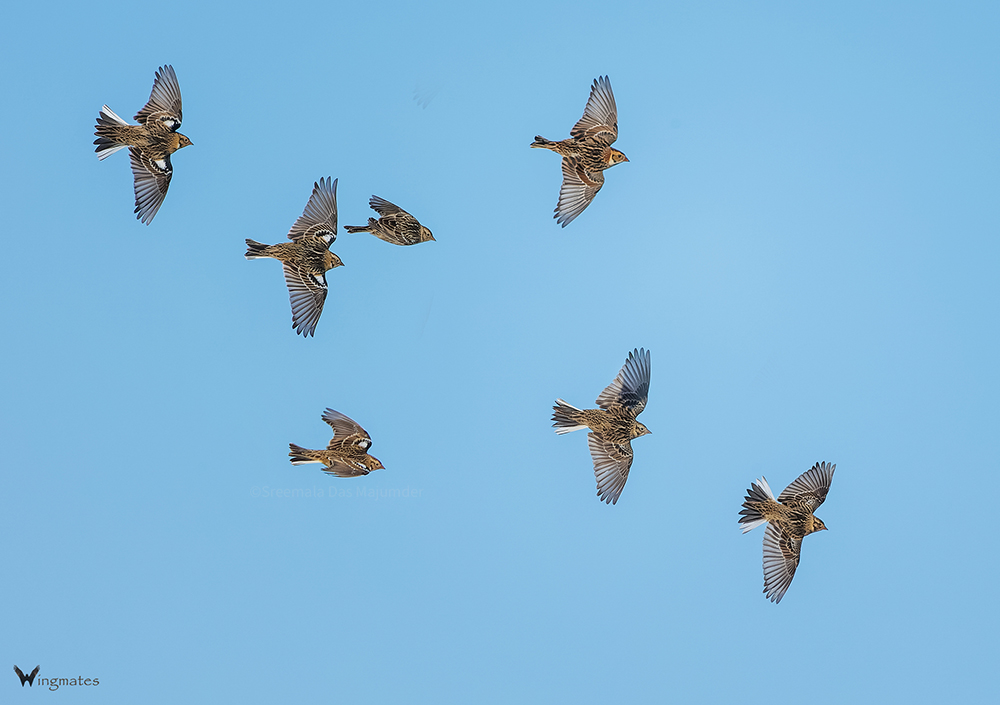 Find the odd one out! There are several Smith’s Longspurs and one Lapland Longspur in this flock. Look for the one with more whitish throat and a clear brown patch in the wings.
Next, we went to our favorite raptor spot to try to find some Short-eared Owls. Unfortunately, we failed to spot any owl. Lots of Northern Harriers and Red-tailed Hawks were there, but the raptor count was overall much lower than last year when we were seeing 20-30 harriers per outing. The sunset colors are usually good out in these plains. It was no exception on this day!
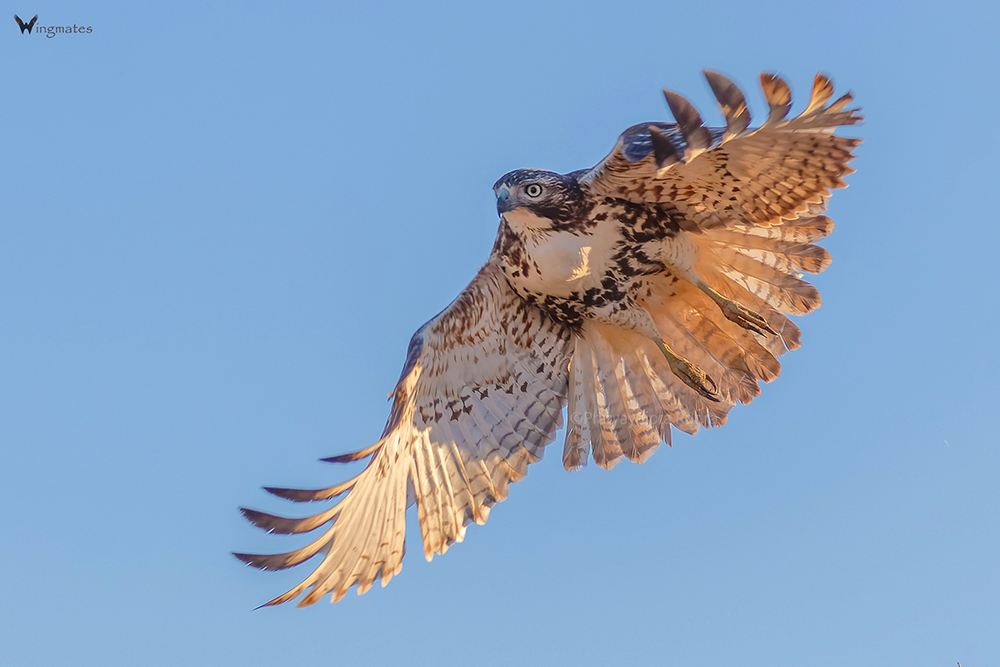 Red-tailed Hawk taking off.
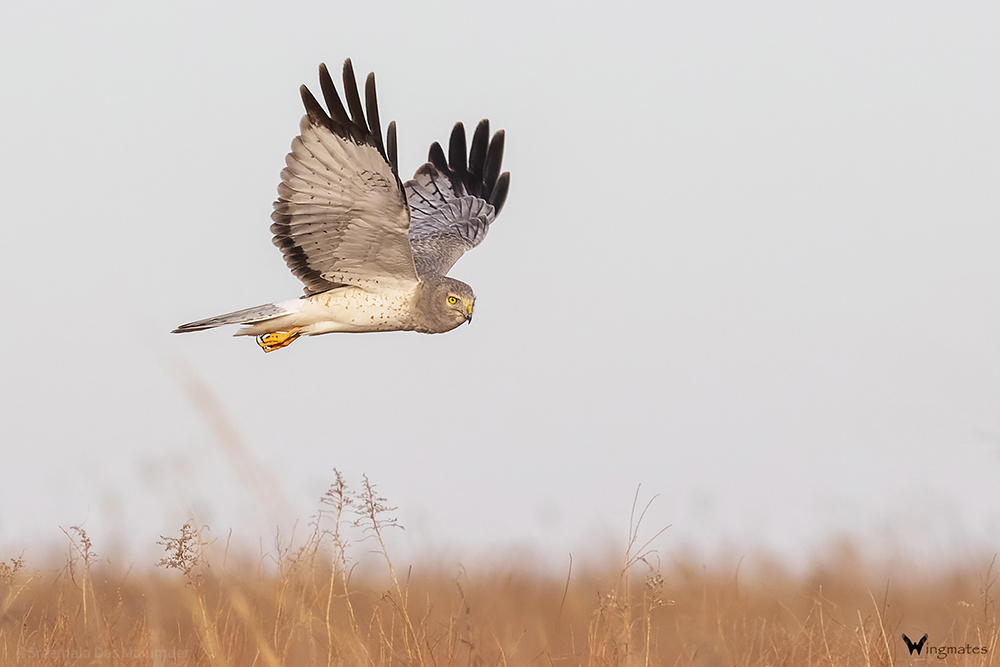 Male Northen Harrier aka grey ghost scanning its feeding ground.
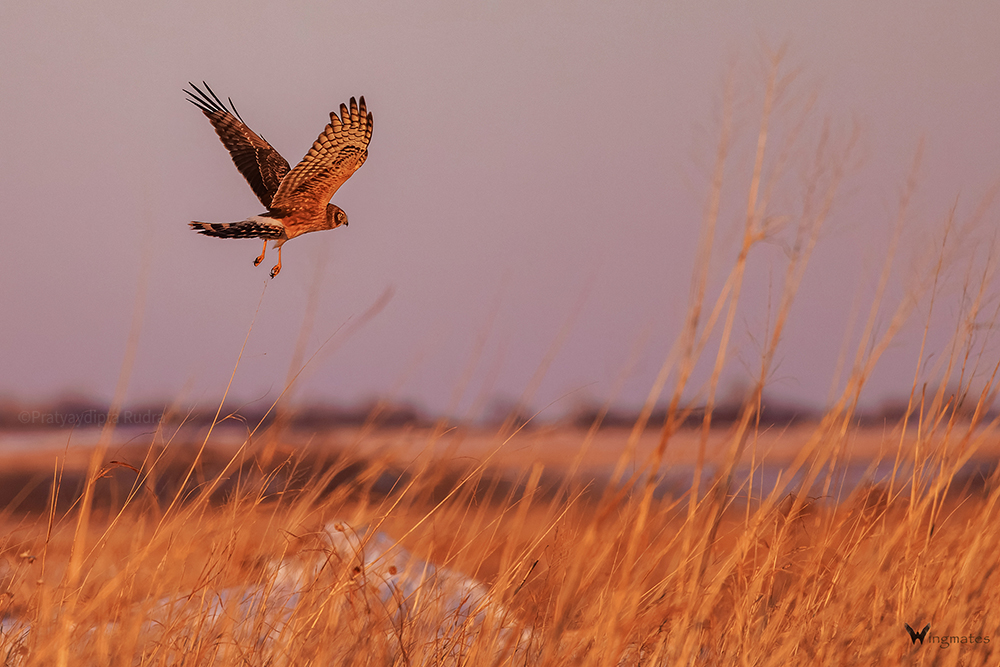 Last chance to grab dinner before for the Harrier before sun down.
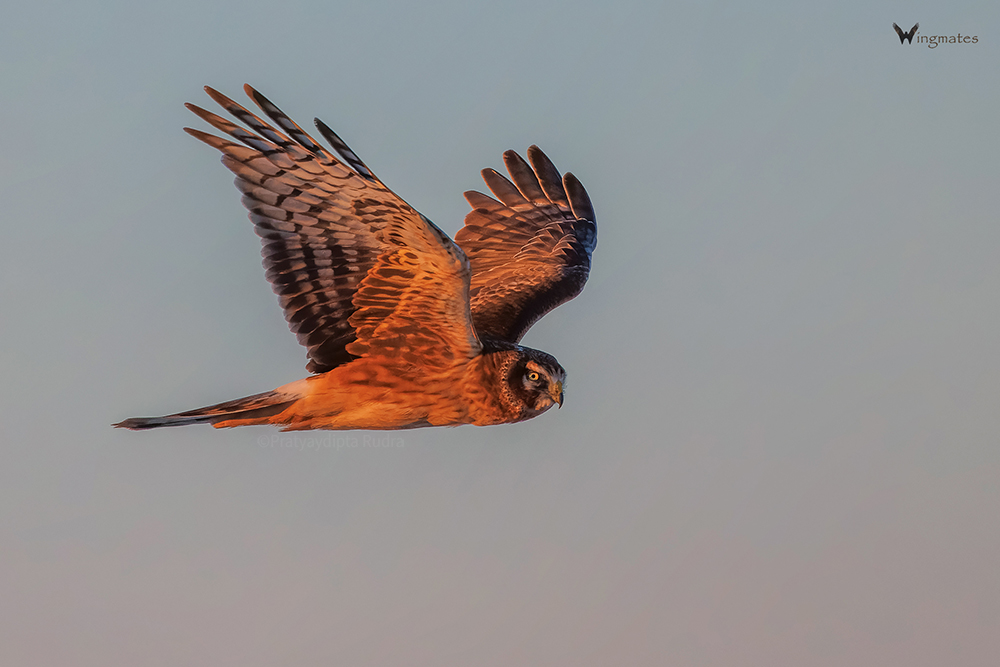 A closer look at the Northern Harrier. The light was gorgeous!
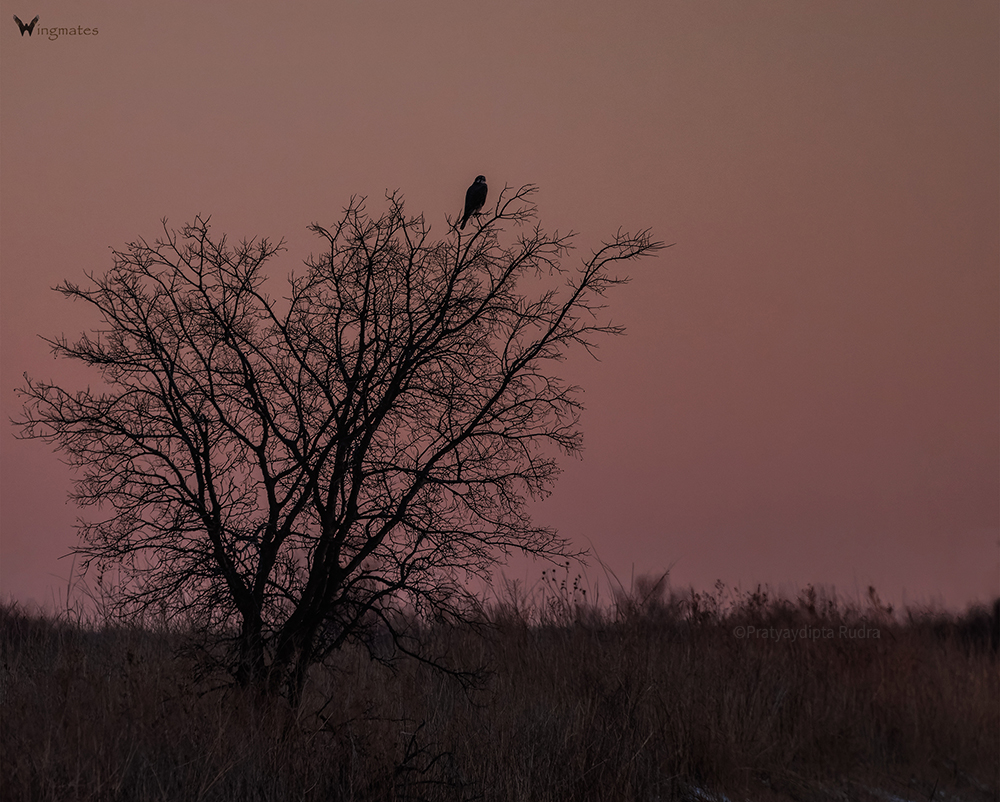 Prairie Falcon calling it a day. We love this shade of peach!
While we were out there, we noticed an increased number of wind turbines in the area. Although wind turbines are a great source of renewable energy, its impact on bird mortality is matter of concern. It has been found out by several studies that millions of birds die each year due to collision with the wind turbines. The impact of wind turbines is greater on some birds compared to others, which also includes some endangered species, and the challenge is to install them in a way such that the impact on these species can be minimized. We should not forget that this does not mean that we should not use wind energy, but it needs to be looked at in the context of the cost and benefit analysis of relative advantages of wind energy as opposed to traditional energy sources.
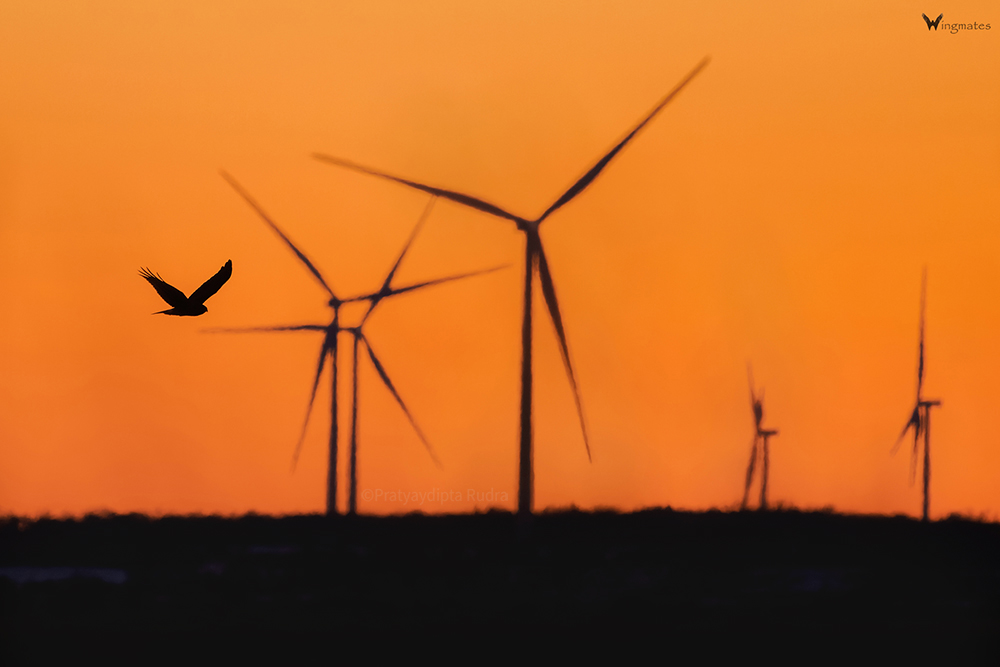 Northern Harrier and the wind turbines.
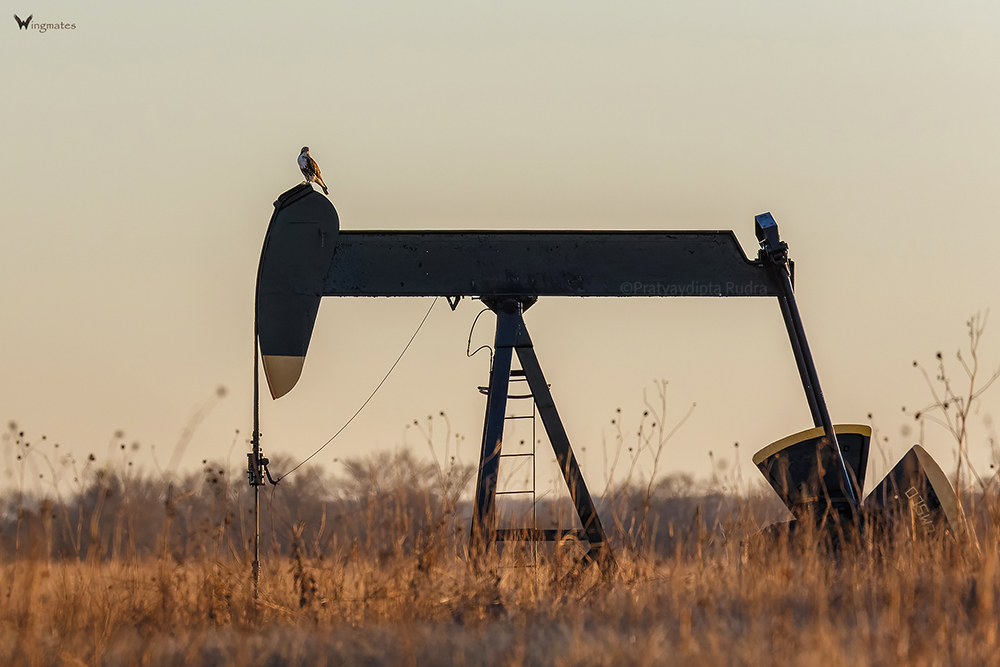 Red-tailed Hawk on a pump jack.
We also noticed some additional oil pumping units (pump jacks) in some areas. Oil and gas drilling is abundant in OK. Some of these use a method called hydraulic fracking. The negative consequences of the hydraulic fracking are increasingly becoming prominent, especially when not properly regulated. For example, it is associated with habitat loss and leeching of harmful chemicals in wastewater ponds. Although they are now more regulated than before, fracking-related issues continue to be a reason for concern.
In Oklahoma, birds of grasslands and open areas face most of these negative consequences since both wind turbines and hydraulic fracking are more abundantly installed in such areas. Much research is being conducted on anthropogenic causes of bird mortality. Among others, Dr. Scott Loss and Dr. Tim O’Connell from Oklahoma State University, both excellent birders here in the Stillwater area, have done significant research related to bird mortality due to anthropogenic causes. Interested readers can consider reading more about their work.
Next morning, we went out for a day trip to Tallgrass Prairie preserve hoping to find some owls. The plan was to bird around Tulsa and meet a local birder, a new-found friend thanks to social media (we always enjoy making new birder friends)! It was a nice crisp morning. On our way, we stopped at the Keystone dam without much birding luck. But a White-tailed Deer and a Carolina Chickadee entertained us.
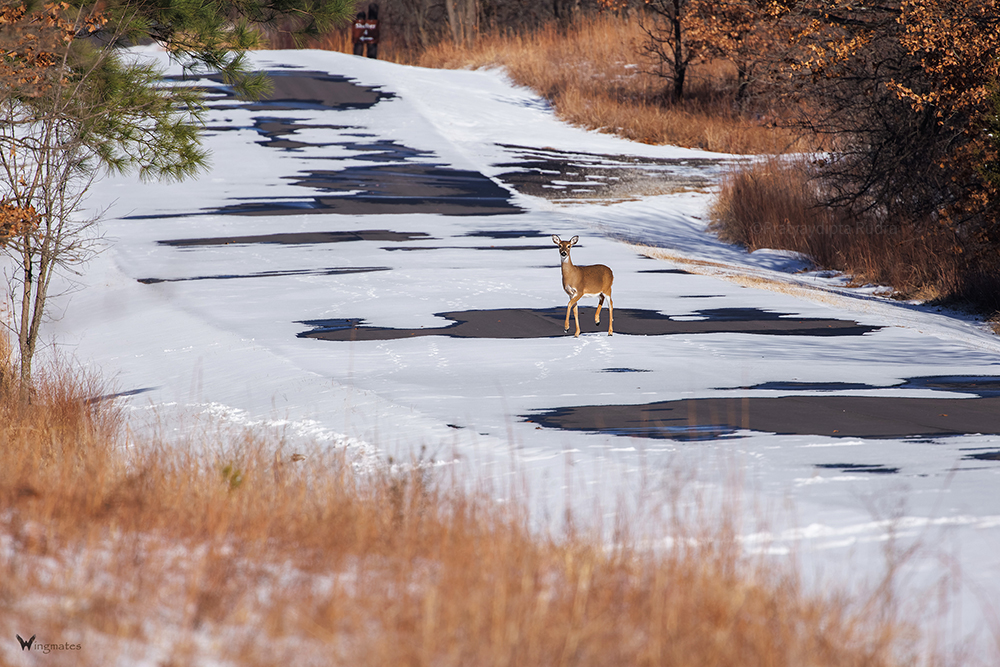 White-tailed Deer on a beautiful crisp morning.
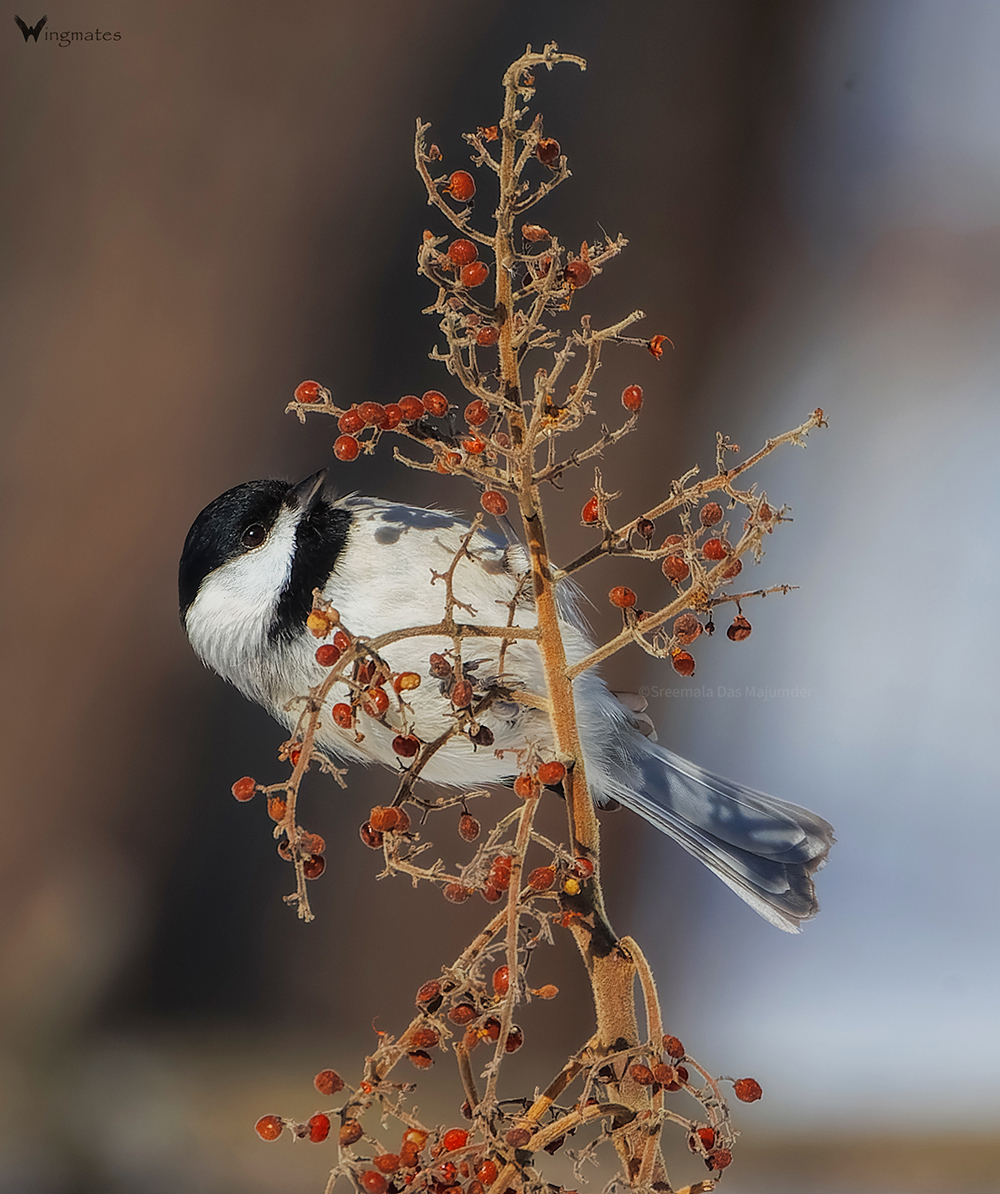 Chickadee finding some breakfast!
We met our friend in Tulsa to see if we can find the elusive LeConte’s Sparrows. This was our n-th attempt to see this bird, which was quickly becoming a nemesis. These little sparrows are one of the smallests in the United States and their favorite habitat is meadows with dense cover of grass or sedge. They are notorious for their ability to hide in the tall grasses. We finally found our lifer Leconte’s Sparrow, but could not get any decent photos. Every time we saw one, they took off soon with their unique short flight pattern before disappearing back into the vegetation. Well, there is always a next time!
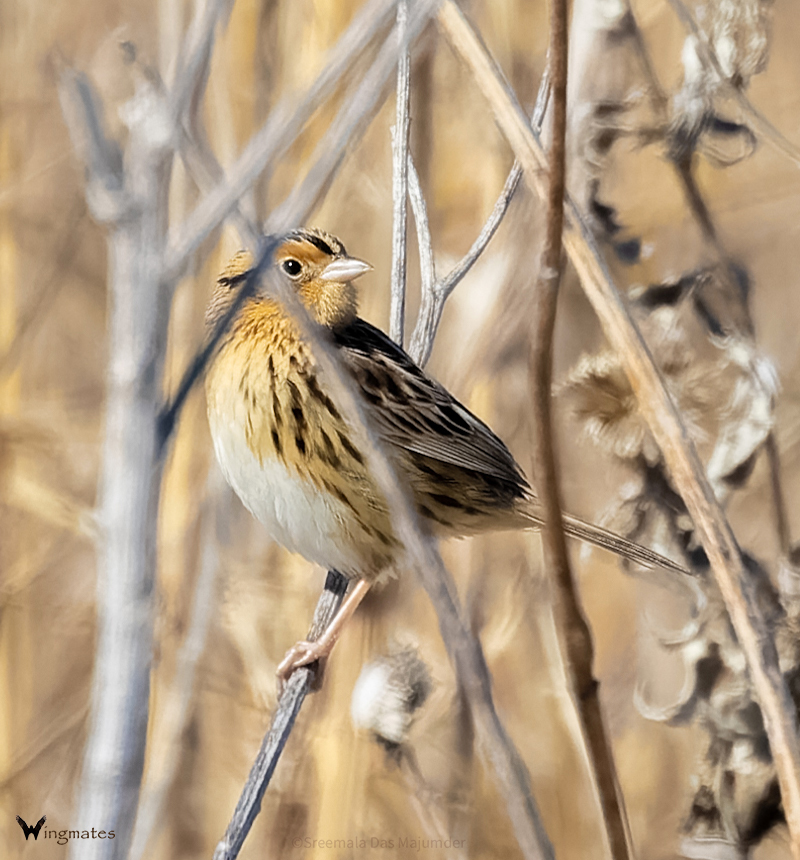
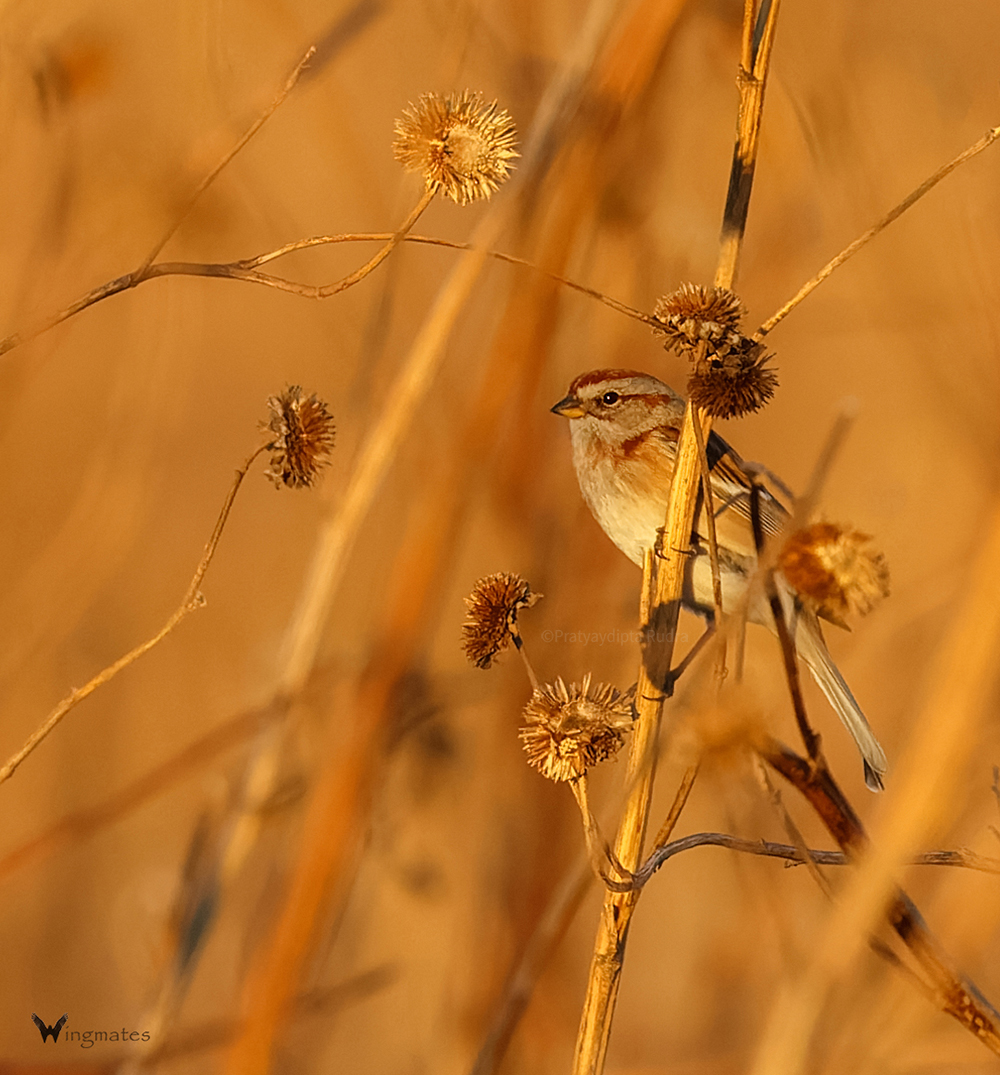 Leconte’s Sparrow (record shot) and American Tree Sparrow
Winter in Oklahoma is quite good for sparrow-watching. Besides the lifer Leconte’s, we watched several other sparrows including Song, Lincoln, Savannah and American Tree. Pratyay enjoying photographing sparrows in their habitat. If you are not into habitat shots like him, we hope you will enjoy the cleaner photo of the pair of Harris’s Sparrows.
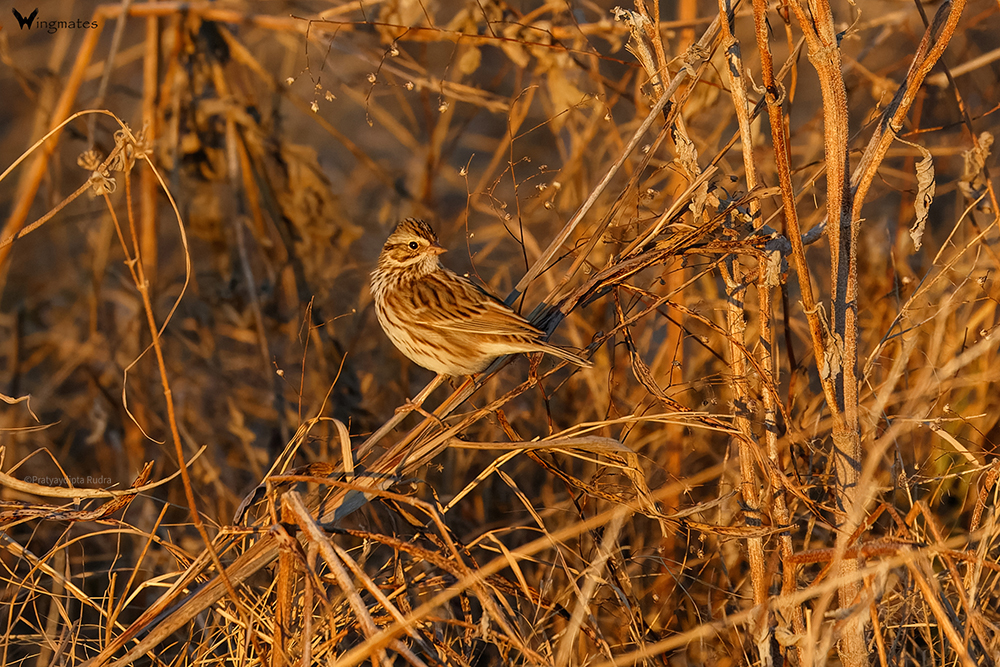 Savannah Sparrow in its habitat at golden hour.
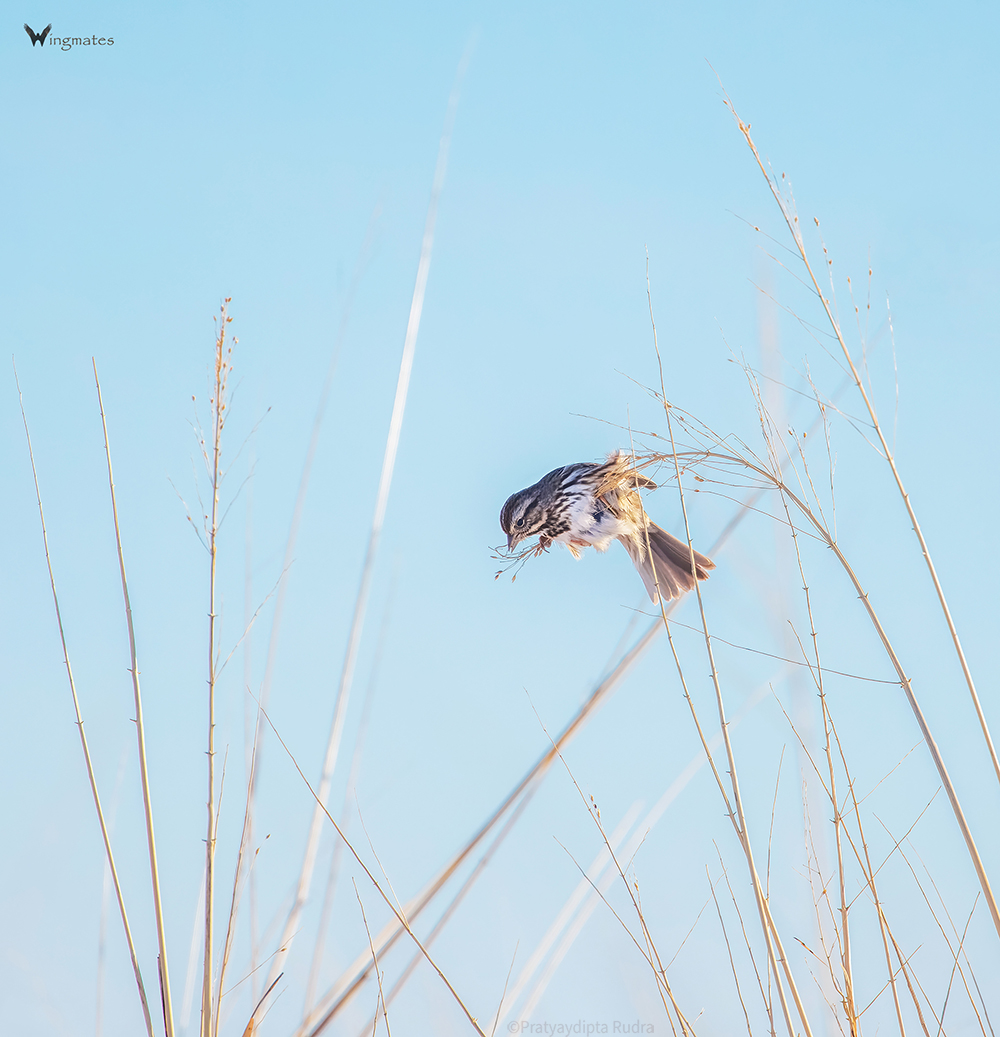 Song Sparrow feeding on the grass seeds while the grass sways in the wind. It was a very windy day!
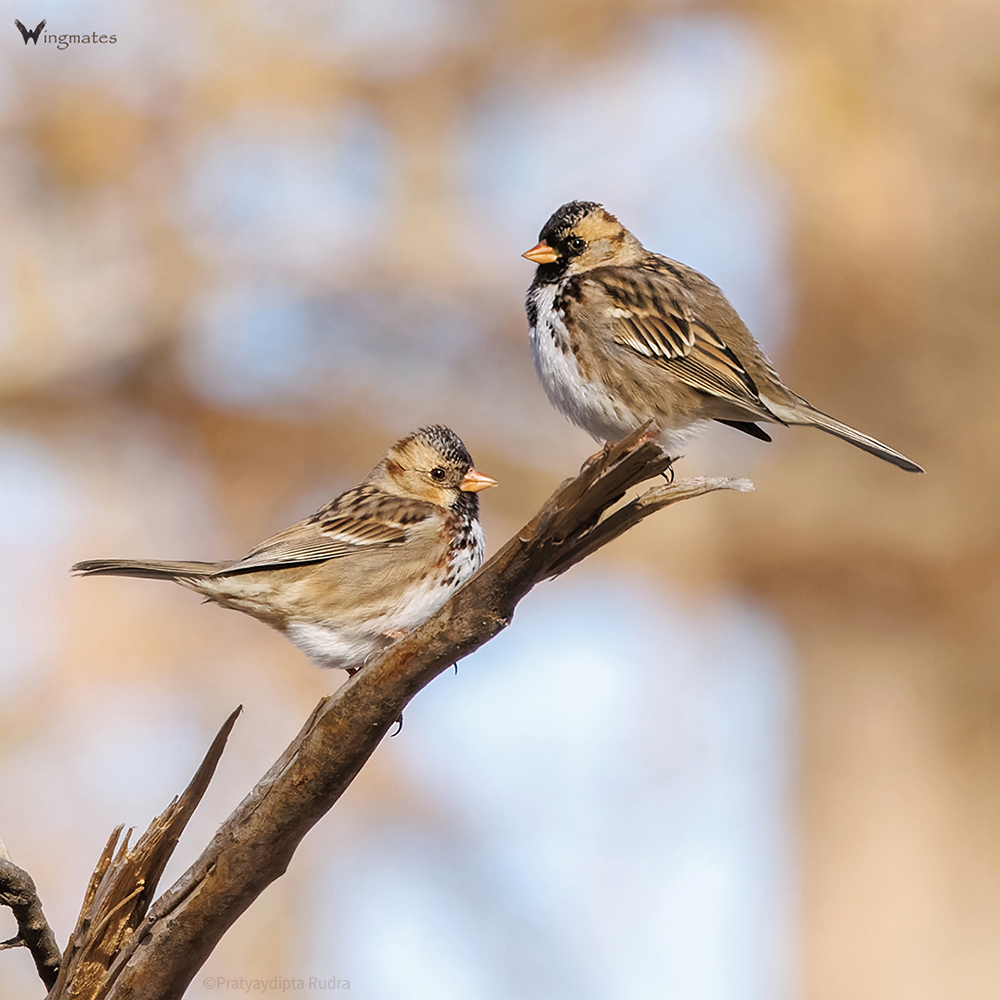 A nice pair of Harris’s Sparrow, our common winter resident.
We headed to the Tallgrass Prairie later that afternoon. Again, Short-eared Owls seemed to be completely absent! We saw a few raptors including one gorgeous Rough-legged Hawk, which happens to be Pratyay’s favorite North American hawk. The Bison were roaming around as usual. A few deer here and there, a few Loggerhead Shrikes, but it was mostly quiet otherwise.
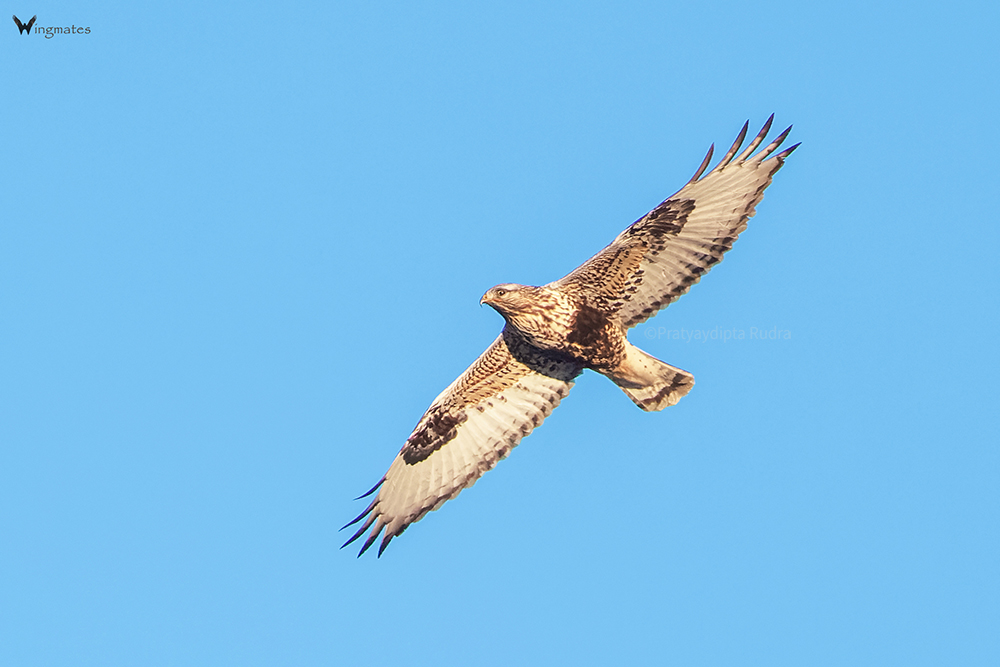 Rough-legged Hawk showing off the underwings
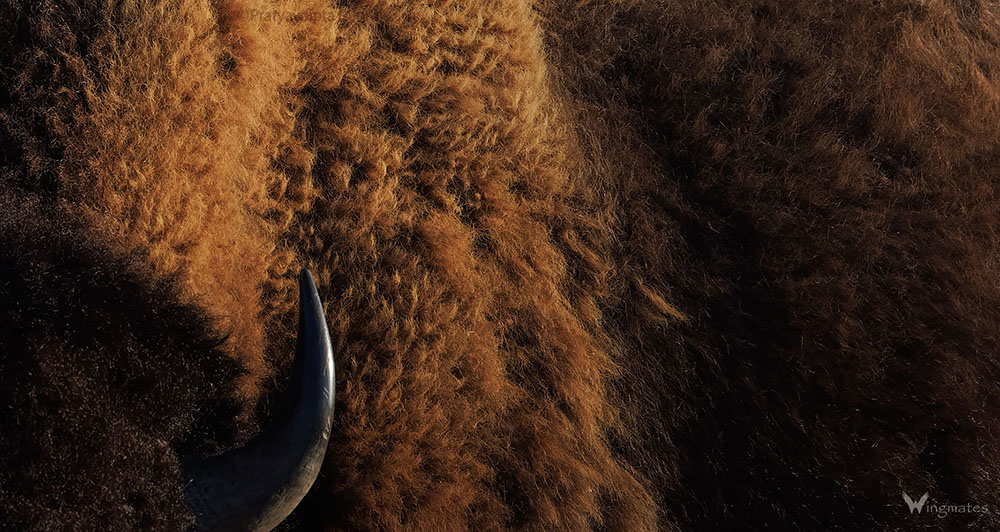 A Bison’s warm winter coat. Don’t try to cuddle though. As innocent they might look like, they can be quite moody, and when angry they can hit you with a huge momentum. Also let’s not forget that shiny sharp object on the bottom left of the screen! ;)
With a sad heart we started our long drive back home. It was disappointing to not find even a single owl since they were thinking how abundant the owls were last year. Here are a few photos from last year, and this is not even half of all the good images we got last year.
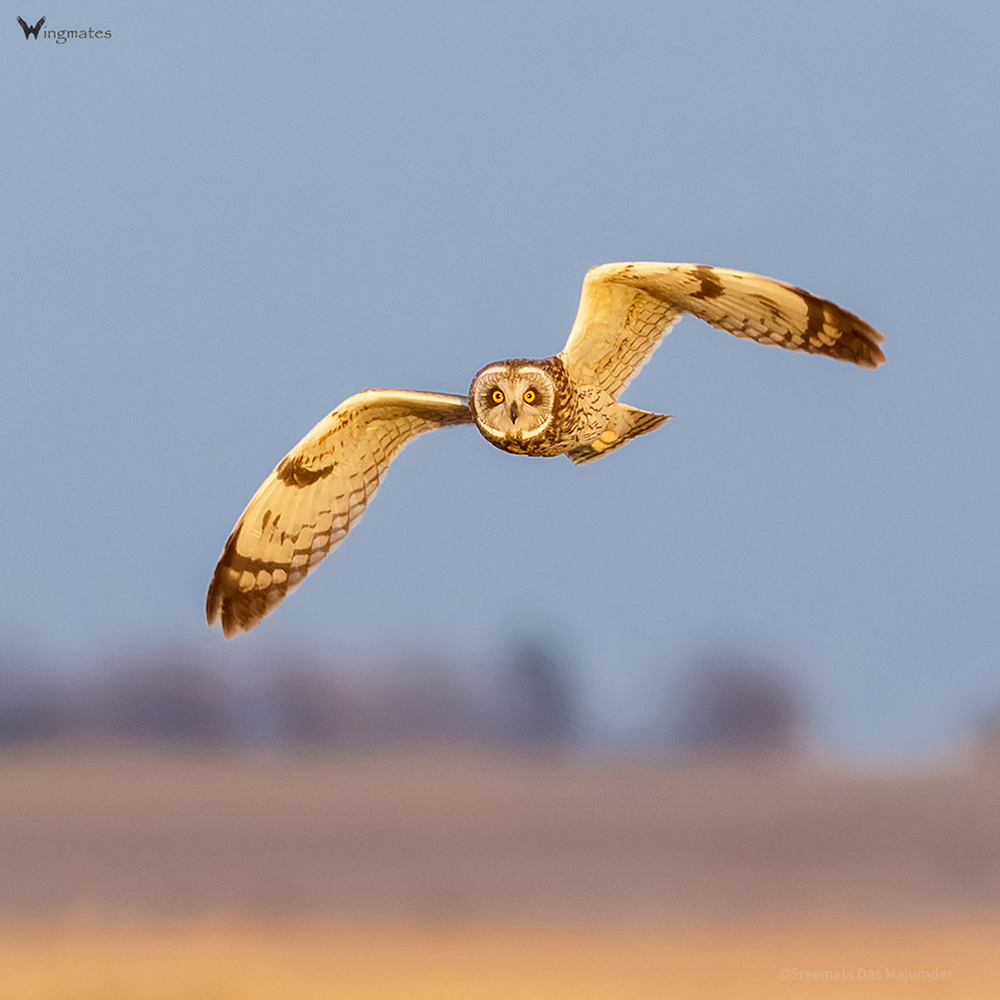 Eye contact with a Short-eared Owl.
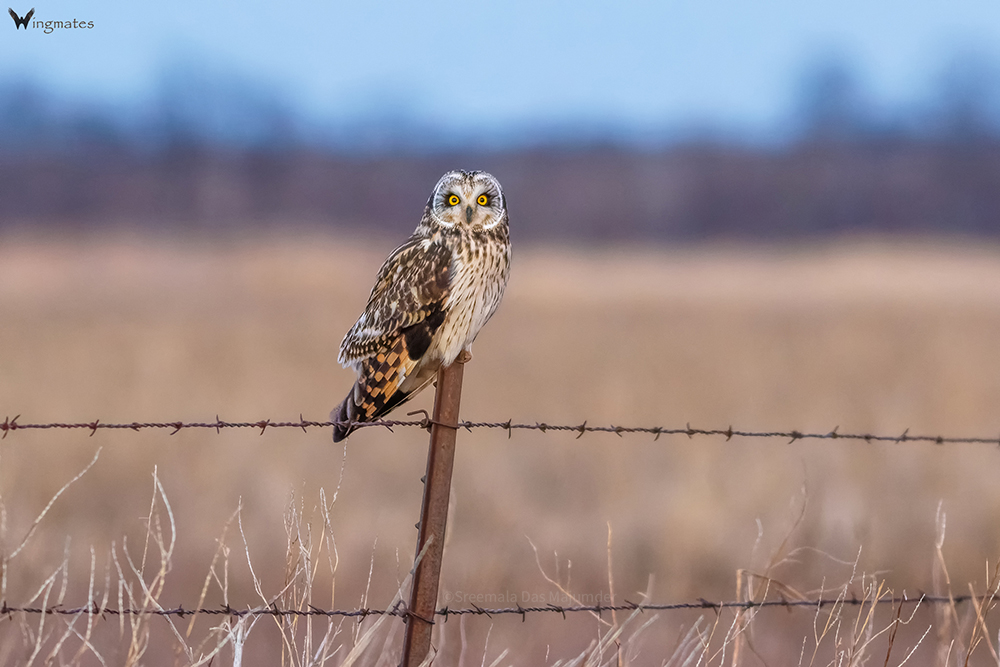 Short-eared Owl on on a barbed fence. Photographed after sunset.
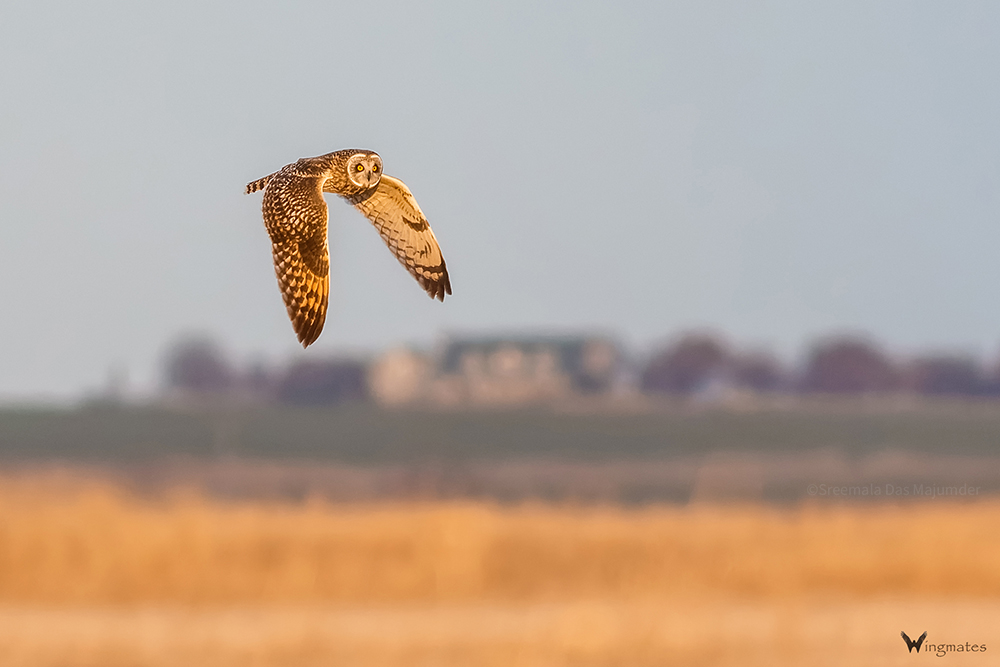 Short-eared Owl patroling its habitat
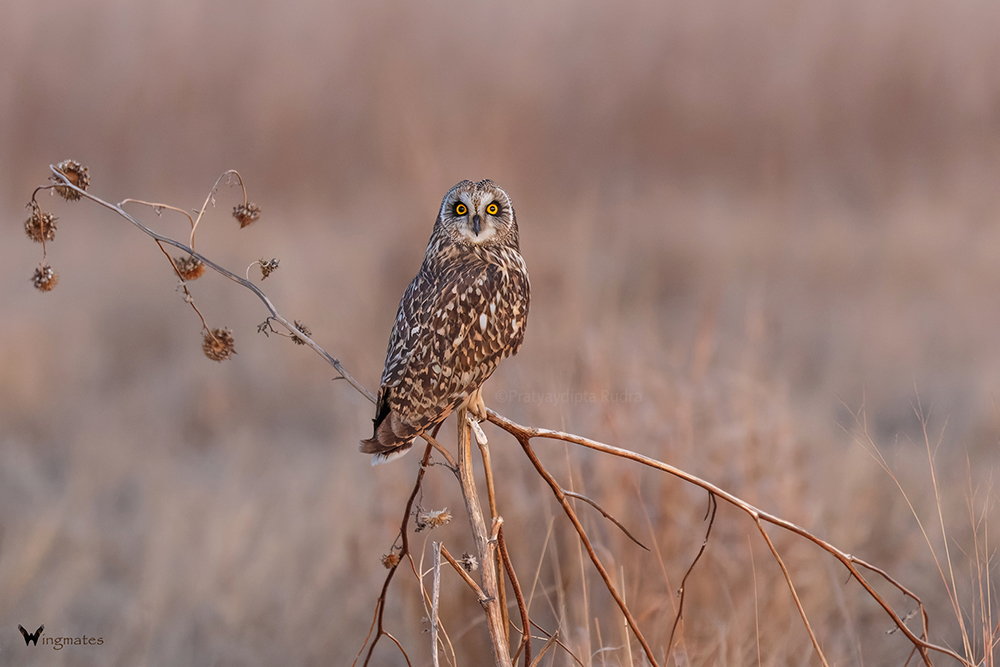 Another after sunset photo of a Short-eared Owl on a beautiful native sunflower perch.
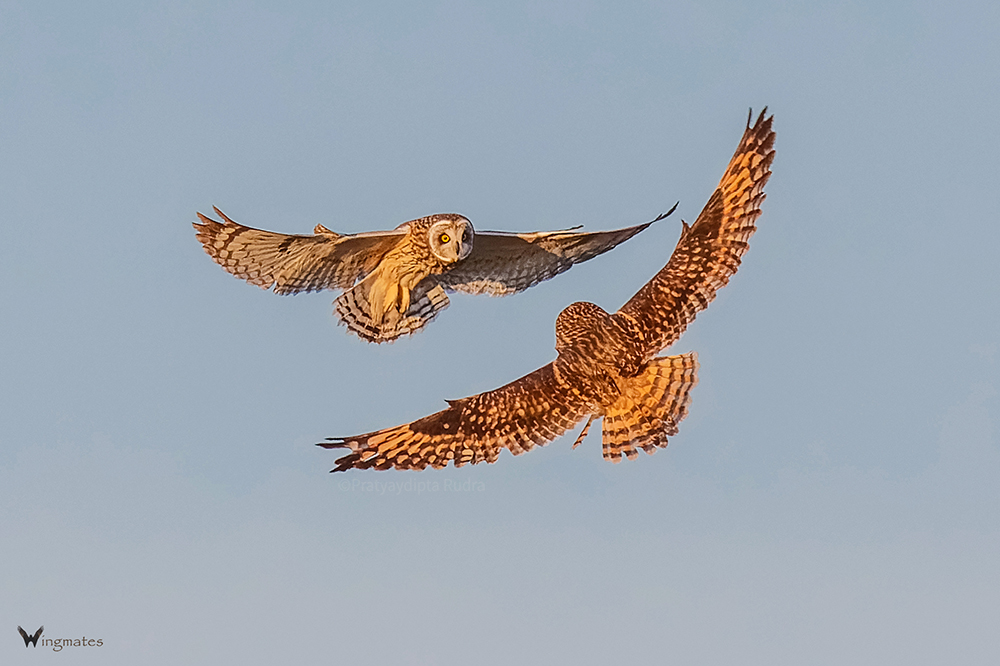 With so many owls and harriers in a small area, there has to be some conflict! Two Short-eared Owl in a face off here!
After a long day, our friend was half asleep while we were driving back. Almost an hour past sunset, it was already dark when we suddenly spotted a short-eared owl flying right in front of our car. Sreemala immediately shouted “Owl owl owl!” and our friend was like “Where? Where is it?” The county roads of Oklahoma do not have heavy traffic and we didn’t hesitate to stop the car to see if we can still locate the bird. It was almost fully dark, but Pratyay saw something that looked like a dead tree out in the field and had a hunch that the Owl might have perched on it. It was so dark that it was impossible to see if anything is sitting on that stump, but thanks to the mirrorless camera’s digital viewfinder, with some extreme exposure settings, we could see that it was indeed there! We were happy that our friend got his lifer and even a record shot of the bird. Pratyay got this shot below after pushing the camera to the extremes (ISO 12800 and shutter speed 1/10). It’s amazing what modern cameras can achieve given that the owl was not even visible to our eyes!
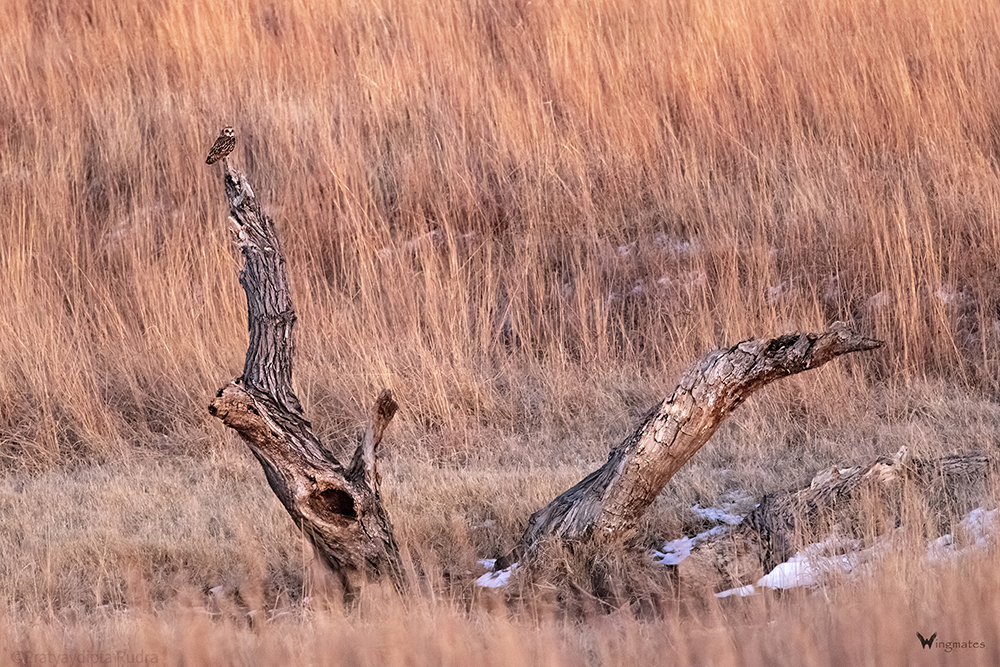 Short-eared Owl after dark (record shot).
Usual birds kept visiting the backyard. February turned out to be quite cold here in Stillwater, and we got two separate snow/ice storms. This reminded us of last February, when we had a huge snowstorm and a deep freeze lead to many birds struggling to stay warm. We started noticing wrens and bluebirds coming near our walls just to get that tiny bit of extra warmth radiating through the wall from inside the house. The feeders were mostly covered by snow. So, we put some seeds, fat balls and water out on our covered patio. Soon they became quite popular with the birds. It was fun watching them doing their things; so, we set our Go Pro on the floor near this feeding station and got some funny footages. We got time to edit these videos only recently (of course!). Here’s a small clip made out of them. Hope you enjoy it!
Backyard birds enjoying the fat ball!
Although it was cold on most days, the Cardinals and Chickadees sang a lot during the warmer days, making a point that spring is not too far. Looking forward to more spring actions and wildflowers in the coming months. So long from February, the not-spring-yet month. We will come back again with more updates in a few weeks!