
It was Friday, March 14, 2025. One of those dry, restless Oklahoma days when the wind never seems to stop moving.
It was just before Spring Break. Parts of our small university town were already quieter than usual. It was the day when Stillwater and several areas across Oklahoma were hit hard by wildfires. Fueled by dry conditions and powerful winds, fires ignited in multiple places and spread quickly across the landscape. When I came back home from work late in the afternoon, the air was already smelling like smoke, and the sky was dark orange.
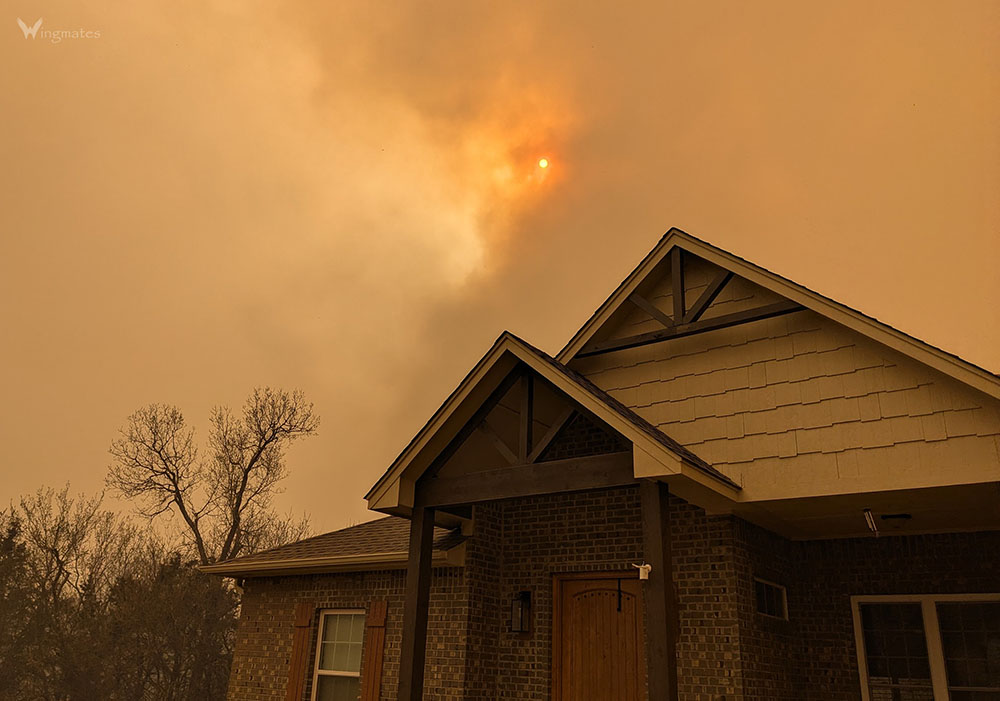 Smokey sky
Controlling a fire like this when the wind is blowing with 70mph gusts is extremely difficult. The aftermath was sobering. News reports later confirmed that more than 150 homes in the region had been damaged or destroyed.
Like many others in the area, we had to evacuate our home for the night and stay with friends. Packing a few essentials and leaving the house behind, even temporarily, felt surreal. It was one of those moments when nature reminds us just how vulnerable we are, no matter how settled and secure everything might feel. We are incredibly thankful that we were safe and that our home was spared, but our thoughts were with those in the community who were not so fortunate. Several friends lost their homes and properties.
One place particularly close to our hearts was hit hard as well. Lake Carl Blackwell State Park, our favorite spot for nature photography and quiet time outdoors, suffered extensive damage. Parts of the park burned intensely, including areas with the rental RVs.
A few days after the fires, we visited the park. The scenes there were devastating. In one of the RV areas, only the skeletal frames of the vehicles remained, twisted and blackened. I decided not to photograph them. Instead, I would like to share a photograph of the same spot from the previous fall, a reminder of what had been there not long ago. The trees that once framed that scene had almost entirely burned.
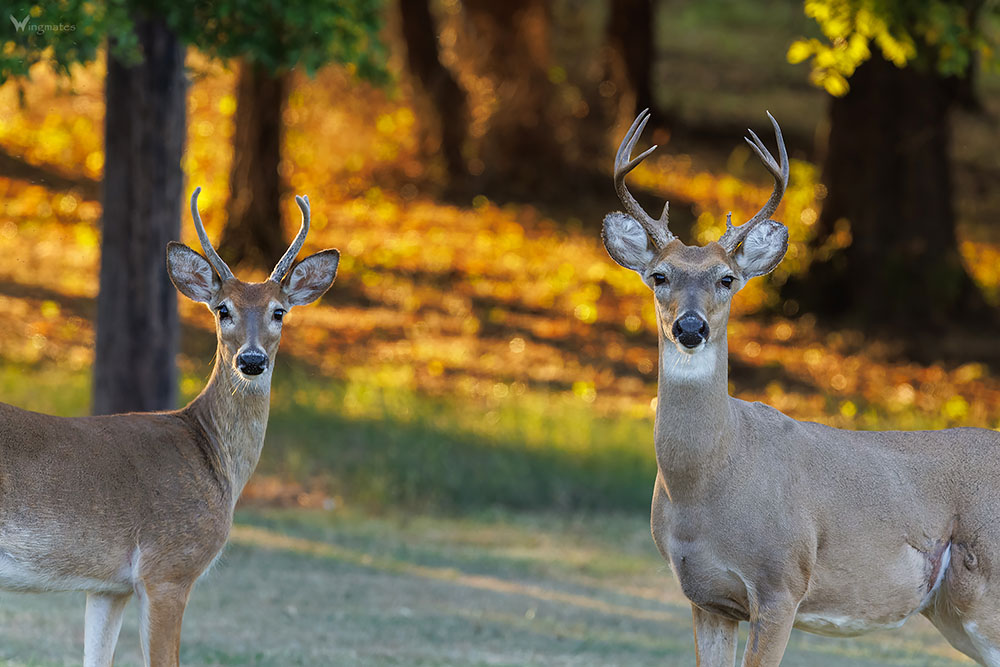 White-tail deer duo from Fall 2024
Life always bounces back. Within a week of the fires, the skies opened up. Heavy rains swept across Oklahoma and neighboring states. Tiny green shoots started pushing up through the darkened soil, and the blackened, leafless trees stood tall like quiet sentinels, bearing witness to both destruction and resilience.
The sounds of life returned too. Pine Warblers were back, singing and establishing their territories as if reminding us that the rhythm of the seasons continues, even after something as disruptive as fire.
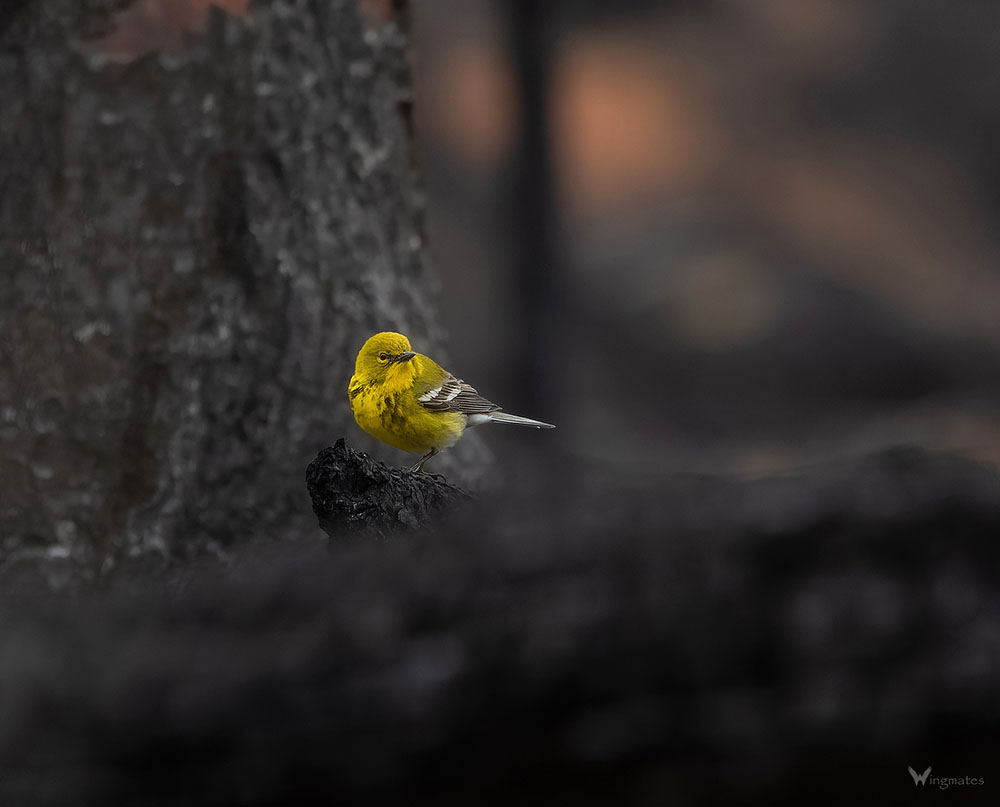 Pine Warbler among the burnt pines
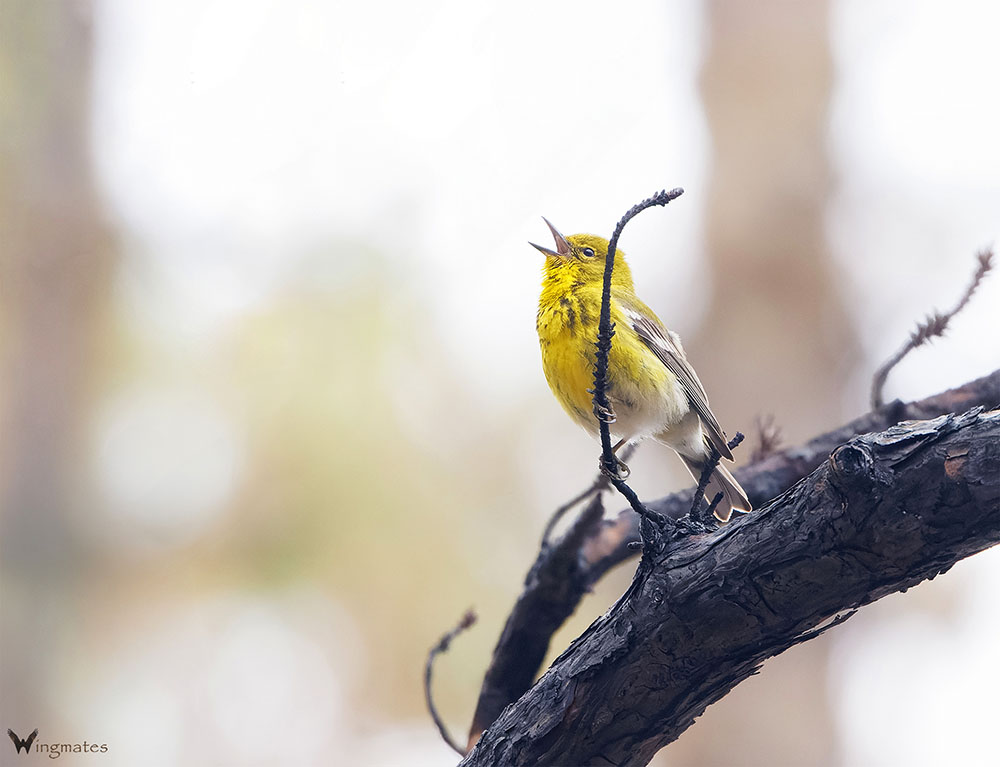 Pine Warbler singing from a burnt branch
One small detail in the landscape caught my attention that day. A burnt pine stump stood alone in the open, and to my eye, its charred shape looked like the baby llama from the Llama Llama books that we’ve been reading so often to Sreeja these days. I couldn’t help but wonder about it in that childlike way: Was he missing his mama? Did he not yet understand that Mama Llama is “always near even if she’s not right here”?
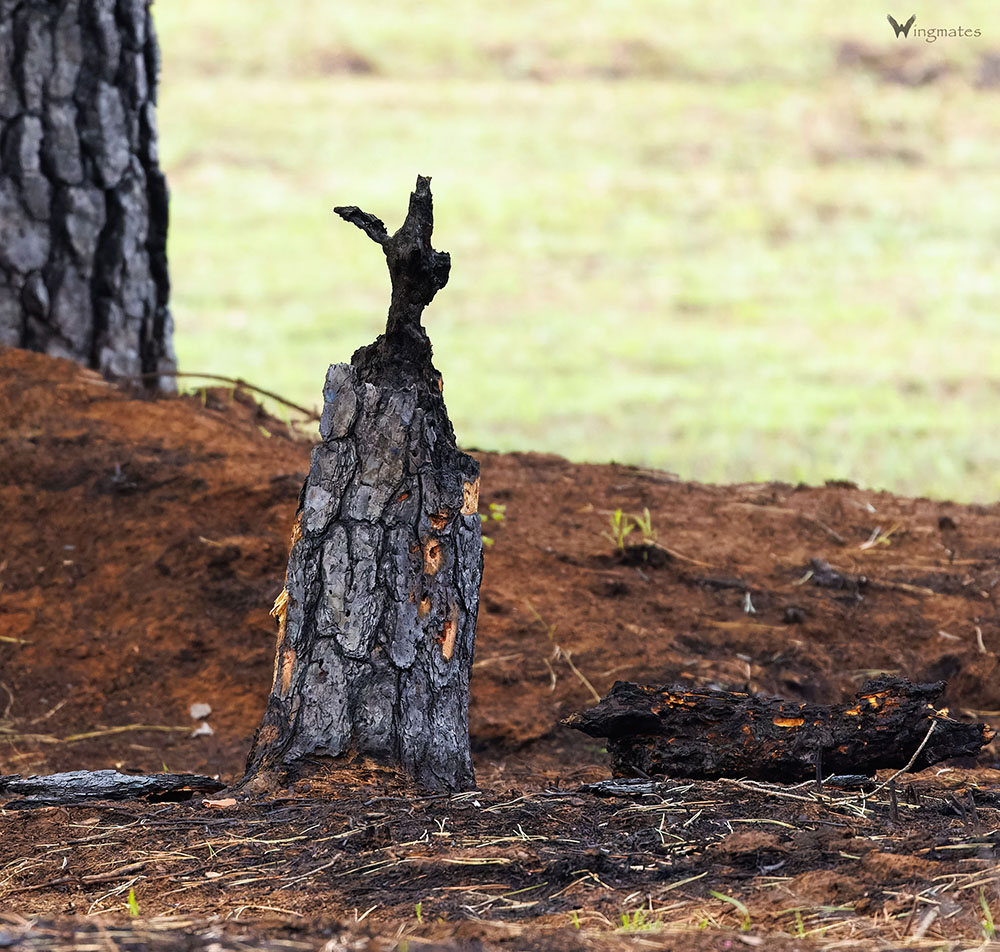 Llama Llama missing Mama?
Over the past year, we’ve watched many of the burned areas slowly regenerate. New growth has been returning with surprising strength. In many ways, the community followed a similar path. During those difficult days, people across town showed up for one another —offering shelter, donating supplies, and simply checking in. The emergency responders had worked tirelessly to bring the fires under control. The flames had come within half a mile of our house. Things could have been far worse if it weren’t for people doing their jobs with dedication, courage, and care.
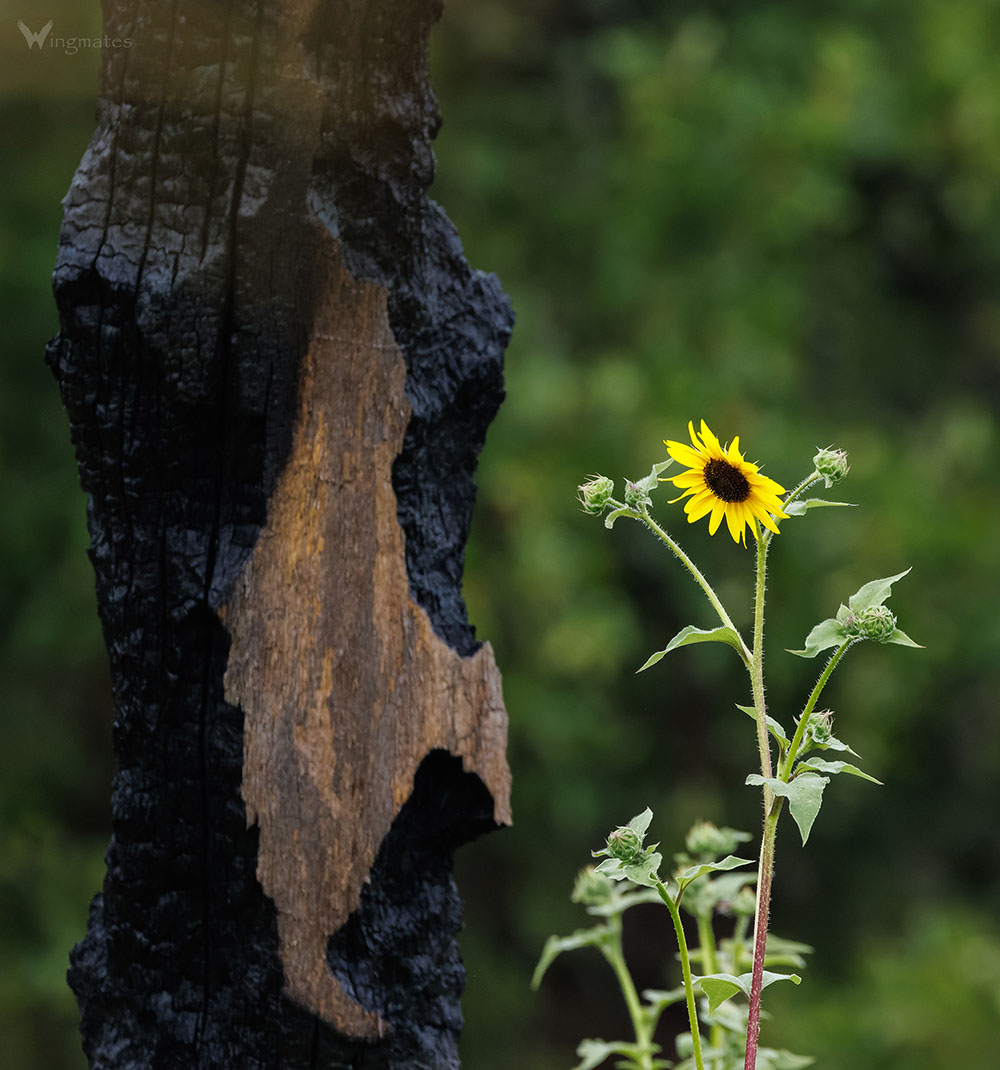 Wild sunflowers blooming at a burn site, summer 2025
As frightening as that day was, looking back a year later we feel a deep sense of gratitude for safety, for community, and for the quiet ways both people and nature find ways to heal. The beloved Llama Llama author Anna Dewdney, who passed away at the age of 50, once said that her books were meant to show children something simple but profound: “People love you and they will help you.” Instead of a funeral, Dewdney asked people to simply “read to a child.” She believed deeply in the power of that small act, writing:
“When we read a book with children, then children — no matter how stressed, no matter how challenged — are drawn out of themselves to bond with other human beings, and to see and feel the experiences of others. I believe that it is this moment that makes us human. In this sense, reading makes us human.”
After all the fear and uncertainty that day brought, that message feels especially true. Even in the face of destruction, the things that rebuild a place are often simple: people helping people and quiet moments shared with those we love.
And, like the landscape after the fire, life finds its way back.